MiniMax H3 15-Second Fashion MV Prompt: 13-Cut Beat Sync and Identity Consistency
A technical breakdown of Ima Studio's MiniMax H3 15-second fashion MV prompt structure, featuring 13 beat-synced cuts, 7 distinct looks, and zero identity drift
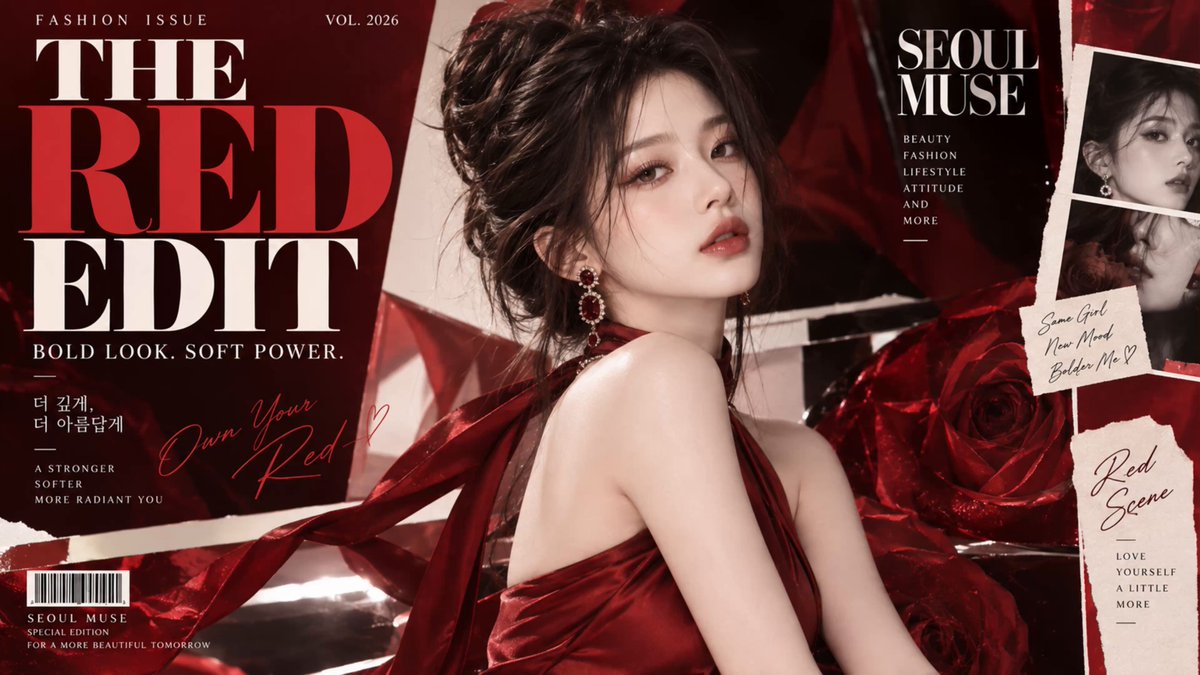
Image source: @ImaStudio_ai on X
Generating rapid multi-cut video sequences with generative AI models while maintaining strict facial identity and clothing consistency across aggressive scene transitions remains one of the most demanding challenges in contemporary AI cinematography. Creator Ima Studio (@ImaStudio_ai) recently demonstrated an advanced structural prompt methodology utilizing the MiniMax H3 model to orchestrate a photorealistic 15-second Korean luxury fashion music video titled 'THE RED EDIT', packed with 13 beat-synced cuts and seven distinct outfits. This editorial analyzes the author's precise blueprint for anchor reference preservation, micro-timed editorial cutting, and dynamic kinetic typography.
1. Character Identity Control and Studio Worldbuilding
The fundamental pillar of Ima Studio's workflow lies in anchoring a single visual identity against rapid temporal shifts. The author specifies an uploaded image reference representing exactly one adult Korean female model, enforcing identical facial anatomy, skin tone, slim proportions, and long dark brown-black hair throughout the entire clip. To combat the pervasive artifact of facial morphing across frame breaks, the prompt explicitly stipulates 'No identity drift' while defining her presence as a mature, glamorous, and confident Korean idol aesthetic. This strict character boundary prevents the underlying diffusion model from synthesizing stray background actors or subtly altering facial structures during rapid camera angle switches.
Complementing the model's locked appearance is a unified editorial studio environment. Rather than dispersing into disparate digital sets, the visual universe is concentrated within a high-fashion installation featuring giant cream magazine spreads, torn burgundy paper, crimson silk drapery, geometric panels, chrome lettering, reflective silver sheets, and 35mm contact strips. Ima Studio balanced the scene dynamics at 55% live-action fashion footage and 45% dimensional motion graphics, governed by a disciplined palette of scarlet, burgundy, cream, black, and silver. This strict spatial containment provides the visual coherence necessary to prevent the fast-paced cuts from feeling fragmented.
2. Seven Outfits and a 13-Cut Beat-Synchronized Timeline
To accommodate seven distinct high-fashion wardrobes within 15 seconds without triggering grotesque generative transitions, the author mandated instantaneous hard cuts rather than interpolating or morphing between outfits. The wardrobe progression spans a burgundy tweed jacket with a red mini skirt (Look 1), a scarlet fitted mini dress with black boots (Look 2), a cream top with a high-waisted red skirt and ruby necklace (Look 3), a black corset with a burgundy skirt (Look 4), a red cropped leather jacket (Look 5), a metallic silver-red top with a fitted black skirt (Look 6), and a structured scarlet off-shoulder couture gown (Look 7).
Each cut is mapped directly to sub-second timestamps aligned with a 120–124 BPM cadence. The sequence opens at 0–0.8s with an extreme eye close-up on burgundy paper (THE RED EDIT), moves through Look 1 at 0.8–1.7s with a waist-up turn (SCARLET), 1.7–2.6s beauty close-up (SEOUL MUSE), Look 2 at 2.6–3.7s full-body walk (RED SIGNAL), Look 3 at 3.7–4.8s paper fold reveal (CRIMSON TOUCH), Look 4 at 4.8–5.9s seated pose (BOLD MOOD), Look 5 at 5.9–7.0s silver reflections (ICON GIRL), Look 5 at 7.0–8.1s against a giant red typography wall (강렬하게), Look 6 at 8.1–9.2s framed by contact sheets (AFTER DARK), Look 6 at 9.2–10.3s torn-paper reveal (OWN THE LOOK), Look 7 at 10.3–11.4s on a minimal grid (SEOUL MUSE), and Look 7 at 11.4–12.7s slow push-in as layout elements assemble (THE RED EDIT). The piece culminates at 12.7–15.0s as graphics snap into a finished luxury magazine cover, locking into a completely stationary frame for the final 0.5 seconds.
3. Motion Dynamics, Audio Specifications, and Operational Caveats
The rhythm of the piece relies heavily on the deliberate contrast between model motion and graphic velocity. While the model executes measured, elegant physical gestures such as hair brushing and subtle posture shifts, the graphics slam, fold, and flip with high kinetic intensity. The audio design specifies a 120–124 BPM instrumental K-pop track driven by punchy kicks, clean basslines, tight hi-hats, paper snaps, and metallic clicks, entirely devoid of dialogue or vocal tracks. Furthermore, the negative constraints aggressively eliminate extraneous individuals, outdoor environments, dancing, slideshow pacing, repetitive framing, flat stickers, cyberpunk aesthetics, and garbled typography.
From a practical production standpoint, creators should note that this specific formula is engineered strictly for high-end studio editorial vignettes. It does not accommodate narrative storytelling or wide spatial exploration without breaking the continuity constraints. Furthermore, AI video synthesis tools can occasionally struggle with exact typographic legibility and edge artifacting on fast paper tears, requiring careful validation of the final freeze-frame magazine cover before deployment in professional commercial pipelines.