Deconstructing Riley Brown's 15-Step Automated Video Pipeline with Claude Opus and Blender
An editorial analysis of Riley Brown's single-prompt video production workflow integrating Claude Opus 5.5, Claude Code, Blender templates, and RunPod cloud ren
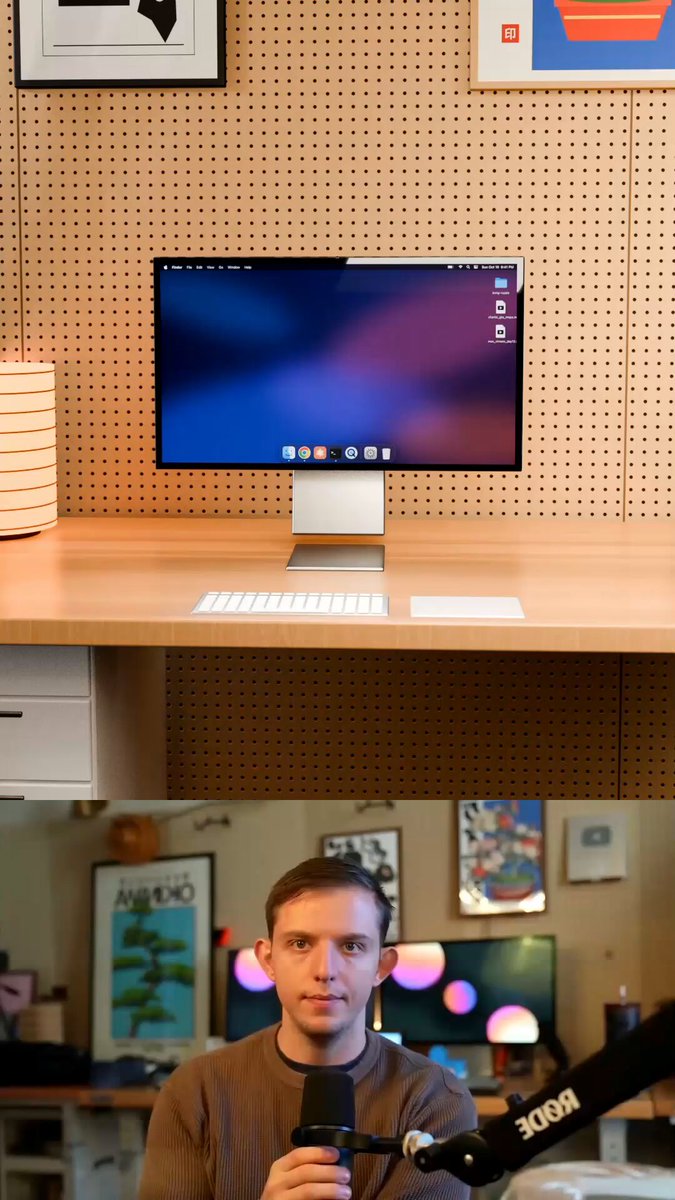
Generative AI workflows in digital video production are increasingly evolving from simple text prompting into automated systems that orchestrate 3D environments, media scraping, and cloud rendering. Creator Riley Brown (@rileybrown) documented a demonstration where an unedited talking-head video filled with spoken mistakes was processed into a fully produced multimedia package using a single prompt. Powered by Claude Opus 5.5 in coordination with Claude Code, Blender templates, and cloud computing resources, the experiment mapped out an end-to-end 15-step editing workflow that challenges traditional post-production boundaries while revealing explicit dependencies.
The Complete 15-Step Pipeline Architecture
According to Brown's published documentation, the pipeline executes a strictly ordered progression from raw footage ingestion to final cloud delivery. Step 1 analyzes the spoken transcript extracted from the raw clip. In Step 2, the pipeline queries Twitter for contextual B-roll assets, with Claude Code directly issuing calls to GrokBot to locate relevant footage. Step 3 scrapes and downloads the identified Twitter video assets. Step 4 performs rough cuts on the primary footage by detecting verbal mistakes and pauses between words. Step 5 instantiates a 3D Blender scene derived from a prebuilt template. Step 6 constructs the specific UI elements and components across four designated camera setups: a computer monitor, smartphone, desk table, and presentation board. Step 7 takes automated screenshots of each section to analyze visual alignment and apply corrective fixes. Step 8 synchronizes every camera angle, zoom transition, and asset animation directly to spoken words. Step 9 triggers a 3D robotic arm animation that places physical company logos onto the virtual desk table exactly when mentioned in the audio. Step 10 draws a whiteboard concluding segment utilizing graphic marks and logos instead of plain text. Step 11 extracts a cutaway snippet from a referenced creator's original video preserving the original voiceover. Step 12 offloads 3,487 animation frames to RunPod cloud GPUs, finishing the entire render in under 20 minutes for an infrastructure expenditure below $1. Step 13 restricts the speaker to a lower-third overlay exclusively during speech intervals, leaving the background B-roll at full resolution. Step 14 superimposes word-by-word synchronized caption tracks, foley effects, and background music. Finally, Step 15 uploads the finalized video asset directly to Google Drive ready for broadcast.
Practical Implications for Automated Media Production
The engineering significance of Brown's test lies in employing a frontier language model as an active orchestrator across heterogeneous desktop and cloud tools rather than merely a copy generator. By leveraging Claude Code to drive external programmatic agents, the system closed the loop between text understanding and timeline manipulation. The integration of RunPod cloud infrastructure highlights how intensive rendering bottlenecks can be externalized cost-effectively without relying entirely on local GPU workstations. Furthermore, utilizing automated visual screenshot evaluation as an intermediate self-correction step demonstrates a practical method for maintaining rendering fidelity inside non-linear procedural environments.
Inherent Caveats and Architectural Prerequisites
Despite the impressive automation demonstrated, several functional prerequisites and operational constraints must be noted before viewing this setup as a universal solution. The entire spatial logic relies on a pre-authored Blender scene containing predefined camera setups and modular assets; without an existing, well-parameterized 3D template, the model cannot synthesize coherent physical scenes from scratch. Brown explicitly noted that his objective is not to distribute a plug-and-play skill, but rather to explain the foundational architecture so users can build their own custom environments. Practitioners must also consider potential copyright ambiguities associated with scraping third-party platform videos and recognize that cloud rendering optimization requires technical familiarity with cloud compute providers.