Engineering Production AI Agents: From State Machines to MCP and GUI Automation
A practical production roadmap for AI agent engineering covering deterministic state machines, standardized MCP server development, and vision-driven GUI automa
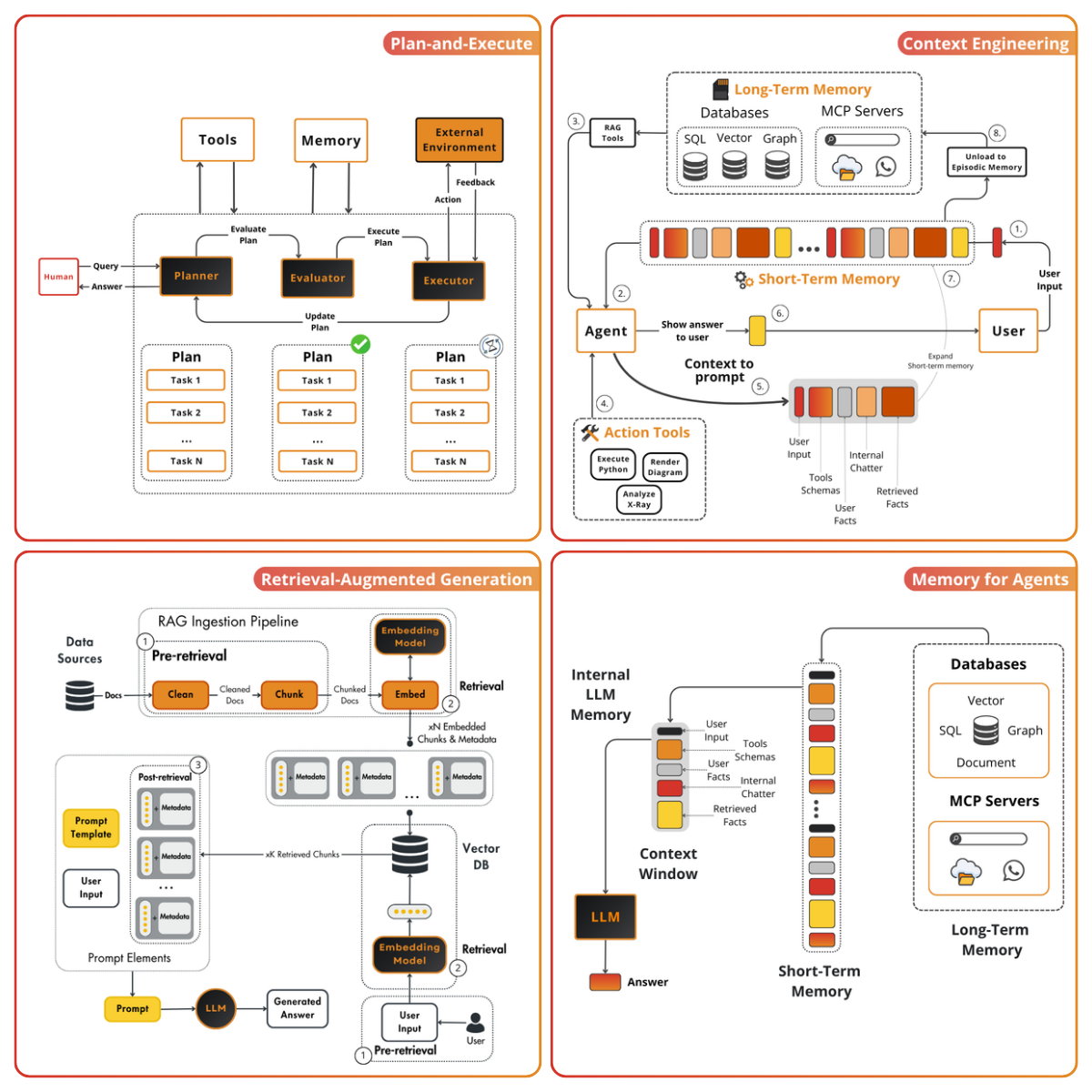
When deploying autonomous AI agents to enterprise production, naive prompt loops inevitably lead to catastrophic unhandled crashes. Engineer Suraj Sharma outlines a practical roadmap to achieve production reliability by mastering deterministic state machines, standardized Model Context Protocol tools, and vision-based GUI automation.
1. Deterministic State Machines and Resilient Architecture
Chat loops relying on fragile while True constructs crash in real-world environments. Enterprise workflows require deterministic state management and crash recovery. Sharma advises mastering Directed Acyclic Graphs (DAGs), cyclic workflows, and state serialization using engines like LangGraph and Temporal.io. Developers must build multi-step agents that loop, branch, and pause deterministically without unbounded loops, ensuring clean recovery after execution failures.
2. Standardized Tool Integration with Model Context Protocol
Bespoke API wrappers fail to scale across enterprise infrastructure. Sharma highlights adopting Model Context Protocol (MCP) client-server architecture, JSON-RPC, strict Pydantic schemas, and dynamic tool discovery. The practical exercise requires writing a raw MCP server from scratch to expose a local PostgreSQL database, handling authentication and scoped permissions without wrapper SDKs, providing secure, standardized interfaces for agentic database operations.
3. Vision-Driven GUI Automation and Practical Limitations
Because eighty percent of enterprise software lacks modern APIs, agents must interact with legacy interfaces via Computer Use. Sharma prescribes mastering DOM parsing, Set-of-Mark prompting, coordinate mapping, screenshot diffing, and Playwright or Puppeteer. The assignment involves building a vision agent that logs into a legacy web portal, navigates menus via screenshots, and downloads CSV files. Engineers must also consider operational caveats. While this roadmap provides foundational steps, later stages like memory and sandboxing were abridged in the source feed. Furthermore, reviewer Cozy rightly noted that early evaluation suites (evals) are crucial to verify whether architectural changes actually improve agent reliability.