The Everything Project Unveils 46 Commercial Software Alternatives as Open-Source Browser Web Apps
The team behind browser-based cloud OS Puter has launched The Everything Project, rebuilding 46 commercial tools—including Excel, Photoshop, AutoCAD, and Slack—
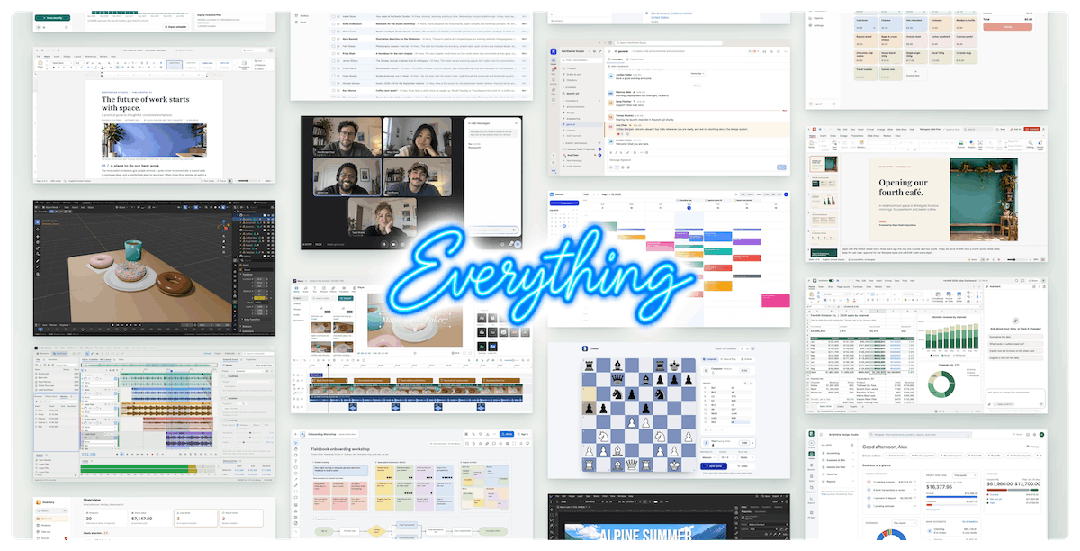
The development team behind the browser-based virtual desktop OS Puter (led by Nariman Jelveh) introduced 'The Everything Project' in October 2026, recreating 46 major proprietary commercial applications as free, open-source web applications that run directly inside modern web browsers.
Image source: https://t.co/rkCQT75V5D
Spanning everyday office suites, creative design utilities, high-end engineering CAD tools, and business management platforms, this project bundles browser-based alternatives to expensive subscription-locked software alongside a selection of web games. The entire codebase has been published as a single repository under the permissive MIT license, allowing developers to inspect, modify, and self-host any included tool freely.
Five Core Domains and Broad Tool Coverage
The 46 applications included in The Everything Project cover five major productivity categories widely used across modern software and business operations:
- Office: Web-based alternatives to Microsoft Excel, Word, and PowerPoint, alongside replacements for Adobe Acrobat, Notion, and Airtable for document processing and structured data management.
- Work & Collaboration: Communication and document workflow applications replicating the core interfaces of Slack, Zoom, Gmail, and DocuSign.
- Creative: Browser-canvas ports of visual and audio editing tools, offering functional interfaces inspired by Adobe Photoshop, Illustrator, Premiere, and digital audio workstation FL Studio.
- Engineering: Browser-based implementations of traditionally heavy desktop CAD and design software, including alternatives to AutoCAD, SolidWorks, Revit, and Altium.
- Business: Administrative and financial interfaces covering alternatives to Salesforce (CRM), QuickBooks (accounting), Zendesk (customer support), Carta (equity management), and Square POS (point-of-sale).
Single-Repository Architecture and Instant 'Try It' Execution
A standout architectural aspect of The Everything Project is its zero-friction accessibility.
Instead of requiring separate local setups for each individual tool, The Everything Project consolidates all 46 tools into a single repository. Each application entry includes an interactive 'Try it' link, enabling users to test the interface and feature set directly inside their web browser without any local installation.
For developers, having full source code accessible in one place makes it straightforward to study these browser-based application implementations and adapt individual modules into custom projects or internal corporate portals under the MIT license.
Early-Stage Caveats, Browser Sandbox Limits, and Enterprise Considerations
While rebuilding commercial productivity suites as web applications is an ambitious undertaking, several technical and operational caveats warrant attention before considering them for mission-critical workflows:
First, as a brand-new release, the project exhibits expected rough edges across user interface polish, edge-case validation, and complex format compatibility compared to mature proprietary software.
Second, heavy engineering and creative workloads face inherent browser sandbox constraints. Tools such as AutoCAD, SolidWorks, FL Studio, and Premiere fundamentally rely on direct hardware acceleration, multi-threaded local compute, ultra-low-latency audio drivers, and offline filesystem access. Web applications confined to a browser sandbox cannot fully match the sustained real-time performance or handle the large-scale project files required by native workstation software.
Third, open-source code does not replace enterprise support contracts (SLAs) or compliance guarantees. Organizations pay recurring subscription fees not merely for software binaries, but for enterprise data isolation, security certifications, and binding support agreements. A standalone open-source repository provides neither customer support infrastructure nor managed liability, meaning teams must conduct thorough internal security audits before handling sensitive production data.
Sources
- The Everything Project Repository: The Everything Project
- Roundtable Space X Post (@RoundtableSpace): 2026-10-16 The Everything Project Overview