How to Uncover Breakout Search Keywords and Early Product Demand by Tracking Vercel Subdomains on Similarweb
A practical research workflow that leverages MVP deployments on free Vercel subdomains (*.vercel.app), using Similarweb's newly discovered organic landing pages
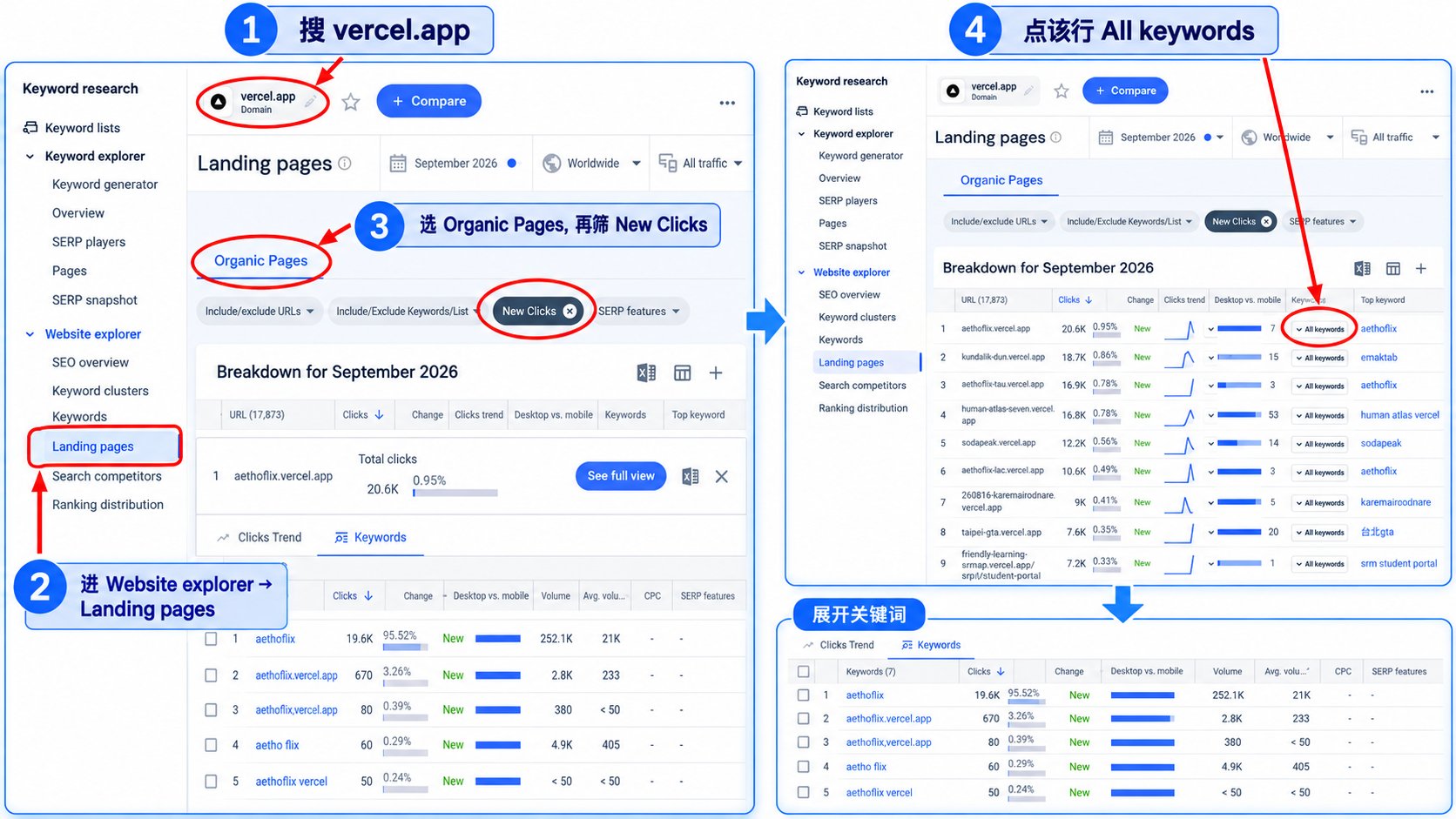
AI builder and creator AIRobert (@aiRobertDaily) shared an unconventional, practical research workflow for uncovering breakout search keywords and emerging product ideas. By taking advantage of how indie developers and builders deploy early-stage minimum viable products (MVPs) on free Vercel default subdomains (*.vercel.app), researchers can trace organic search traffic patterns to spot real market demand before competitors do.
Image source: @aiRobertDaily via X
When validating a new SaaS or tool idea, the biggest risk is investing time and capital into problems that have no organic user demand. AIRobert's strategy reverses this by treating live, traffic-capturing subdomains as public proof of validated market interest.
Core Principle: Free Subdomains as Public Demand Signals
When indie hackers and small teams launch a new experiment or MVP, they rarely buy custom domains immediately. Instead, they take advantage of Vercel's zero-cost tier and fast deployment pipeline, publishing their initial release under a standard *.vercel.app subdomain.
When one of these free test sites begins to pull in organic search traffic from search engines, it creates an immediate, observable signal: searchers are actively querying for that exact tool or topic. In effect, other builders have already done the initial market testing, exposing viable search demand that researchers can systematically extract.
The 4-Step Reverse-Engineering Workflow
The workflow consists of four direct steps:
- Search the Host Domain in Similarweb: Open Similarweb and enter
https://vercel.appinto the search bar. - Navigate to Organic Landing Pages: In the website analysis panel, click into "Organic Landing Pages" and set the historical window between the last 1 to 12 months.
- Filter by 'Newly Discovered': Check the "Newly Discovered" filter to isolate landing pages that search engines have recently indexed and started routing traffic toward.
- Identify Gaining Subdomains and Cross-Verify in Trends: Review the subdomains absorbing search traffic, identify their target keywords, and plug those terms into Google Trends to verify historical search volume trajectory and seasonal stability.
Tool Comparison and Practical Caveats
In follow-up discussions on X, AIRobert shared practical takeaways regarding tool selection and analysis limitations:
- Similarweb vs. SEMrush: Responding to a user asking whether SEMrush could be used instead, AIRobert explained that he tested both tools, finding Similarweb's "Newly Discovered" organic landing page filter substantially more effective for isolating nascent subdomains under a massive host like
vercel.app. - Demand vs. Business Viability: Capturing early search traffic indicates keyword interest, but it does not guarantee a sustainable business model. Builders must still evaluate the competitive landscape on search engine result pages (SERPs) and verify whether the underlying problem can sustain a paid or high-retention product.
Community Insights
The tip prompted immediate recognition across builder and creator circles:
- Validating Demand in Public: User @CloudDogx noted: "free subdomains doubling as public demand signals — that's a genuinely clever trick."
- Capitalizing on Standard Launch Habits: User @AetrixEmby observed that founders launching experiments on free Vercel subdomains unintentionally leave validated niche demand open to discovery on public analytics platforms like Similarweb.
By capturing real-time traffic signals from free developer infrastructure, entrepreneurs can anchor new projects in proven search queries rather than building in the dark.
Original source
- AIRobert (@aiRobertDaily) on X: https://x.com/aiRobertDaily/status/2110993420424778028