Tech YouTube Growth Tip: Screenshare Videos and Riley Brown's BRENS Hook Framework
A faithful rundown of Riley Brown's tech YouTube growth advice: how to plan a screenshare video and the verified scope of his BRENS (Big, Relatable, Easy, New,
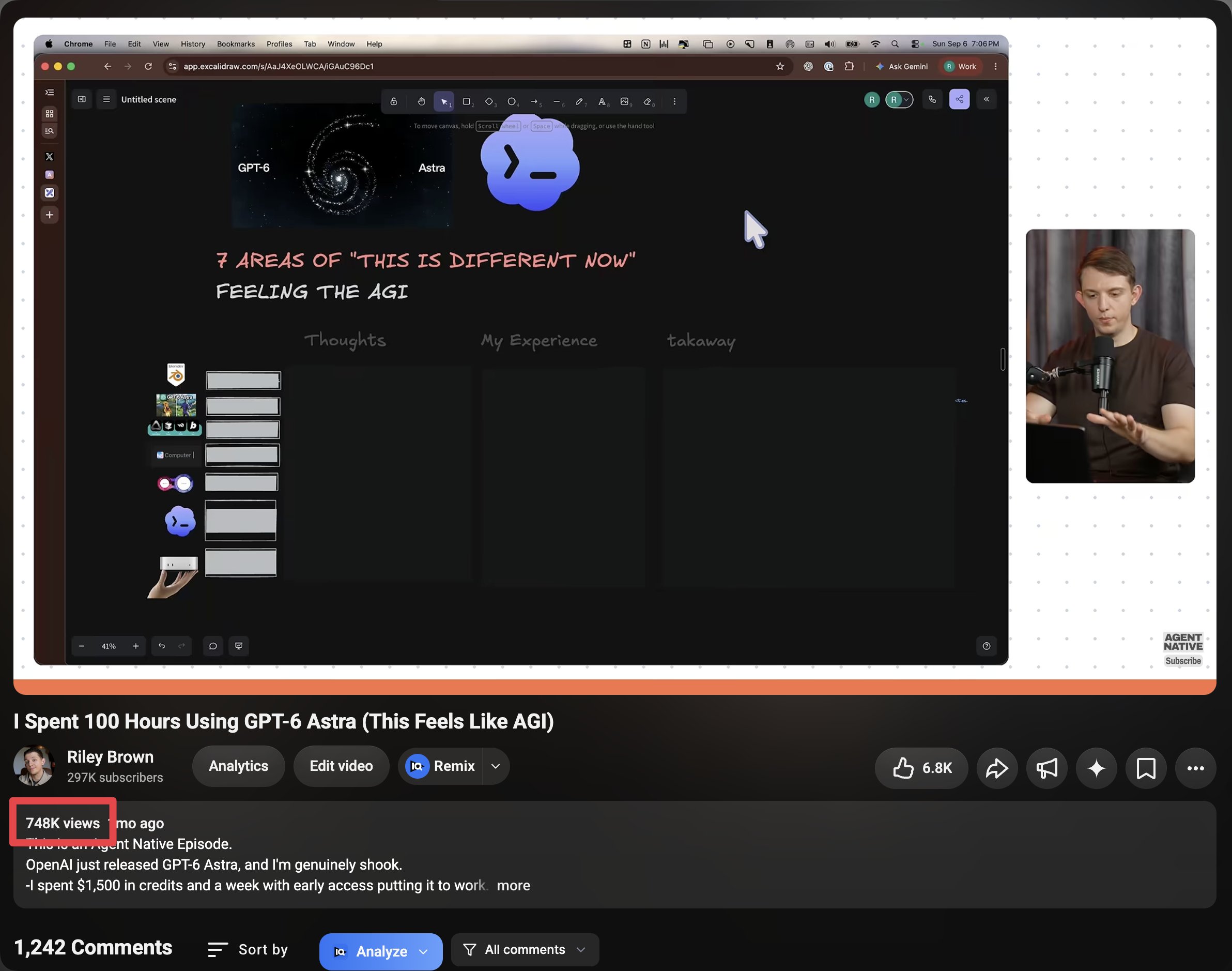
The original author is Riley Brown (@rileybrown). In an X post dated October 8, 2026 (October 9 in Korea time), he shared concise YouTube growth advice for technical creators.
Image source: Riley Brown (@rileybrown) X post attachment
The core advice is simple: pick a topic you find (1) interesting and (2) helpful and close to the edge of AI capability, then explain it in a screenshare video.
How to plan the screenshare video
Here is the opening format Brown describes:
- Show your face and the screenshare from the start of the video.
- Put a visual on screen, such as an Excalidraw board, that communicates what the video is about at a glance.
- Example: if the video shows how to build internal tools with Claude Code, show a Claude logo with an arrow pointing at a high-quality internal tool screenshot.
- You don't need a highly edited intro. A good hook and a visual that communicates the topic are enough.
Replies point in the same direction. @hecodesforme called face-plus-screen on something genuinely interesting the oldest YouTube trick that still works, @BlakeMurphy noted that a screenshare shows what the tool actually did — including the awkward parts a polished claim might hide — which gives a technical audience a reason to trust the explanation, and @Ivrqen added that raw screenshares showing the actual edge beat overproduced videos.
The BRENS hook framework: verified scope only
Brown says the hook should follow what he calls the "BRENS" framework. The five named elements in the source are Big, Relatable, Easy, New, Safe.
The only definition fully confirmed in the collected evidence is the first one:
- Big — It's a big deal.
- Relatable — the collected source text cuts off right after the dash, so no definition is carried over.
- Easy, 4. New, 5. Safe — only the names are confirmed in the post body; no definitions are added beyond the evidence.
So the verified claims this article can carry are the five element names plus the definition of Big. Interpretations or examples for the remaining items should wait until a follow-up post from the author is confirmed.
As a practical starting point, check even the Big criterion first: does the planned video feel like a big deal to the viewer, and can the screenshare show real results as evidence?
Original source
- Riley Brown (@rileybrown) original post: https://x.com/rileybrown/status/2108223689783189848