Riley Brown Unveils Free Open Resource Library for Agentic Video Editing Automation
AI creator and developer Riley Brown has announced an open resource library designed to fully automate video editing workflows using AI agents. Starting with mo
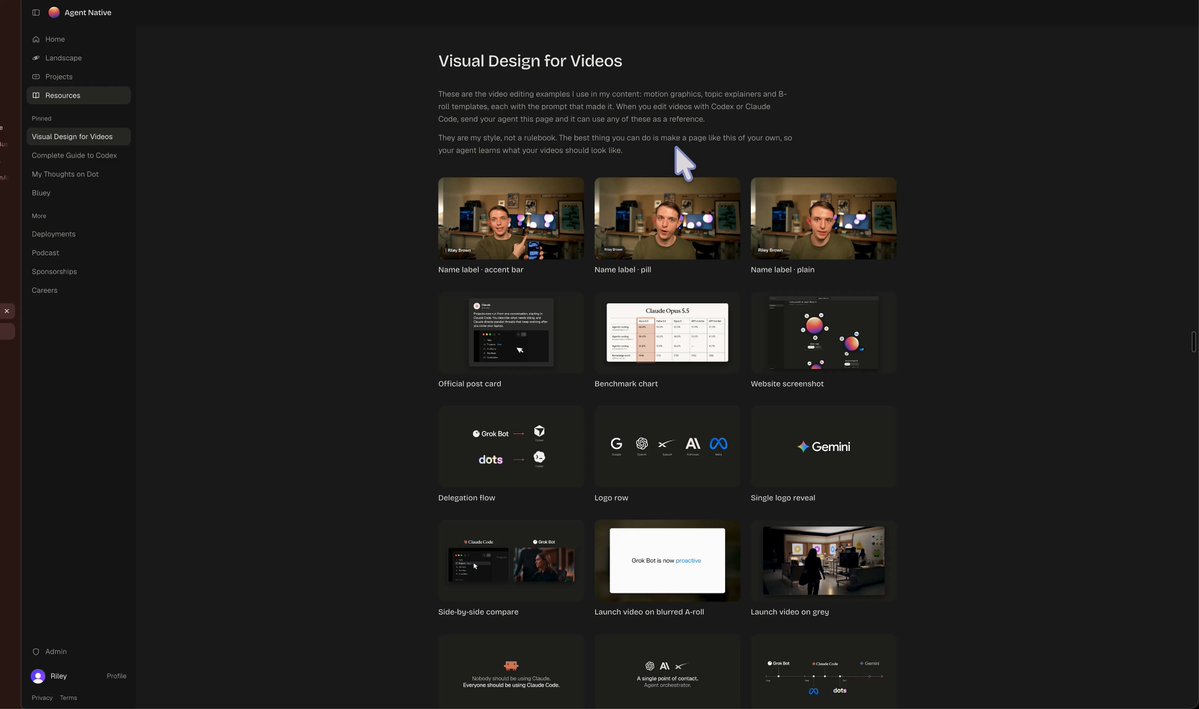
On October 7, 2026, AI creator and developer Riley Brown announced plans and initial assets for a public resource library dedicated to agentic video editing. Built to facilitate the end-to-end automation of his second YouTube channel's editing workflow using autonomous AI agents, the initiative is developed fully in the open, with all assets pledged to remain permanently free for human creators and automated pipelines.
Image source: @rileybrown on X
The project aims to provide practical visual assets that both human editors and autonomous AI agents can reference and use directly during video editing. Brown pledged that all resources in the repository will remain "always free."
Motion Graphic Overlays for Talking Head Video Pipelines
The initial release focuses on motion graphic overlays tailored for talking-head content, a common format across creator and educational channels.
Demonstrated through a high-definition video showcase, the assets include animated text callouts, graphic banners, and visual accent overlays that appear alongside the speaker.
- Assets for Human and Agent Editors: Rather than unguided manual editing, Brown provided overlay and motion graphic assets that human creators and AI agents can use as practical examples when editing talking-head videos.
- Hundreds of Additional Assets Planned: Following the initial demo, Brown outlined plans to make ongoing improvements and integrate hundreds of additional overlay graphics.
These assets serve as foundational reference examples, enabling agents and creators to select and position visual context during speech pauses or thematic shifts without requiring separate graphic design workflows.
Expanding the Toolkit: Web Scrapers, Logo Libraries, and Curated Audio
Brown emphasized that the library will expand beyond motion graphics into a broader collection of resources for video editing automation.
- Video-Oriented Web Scrapers: Dedicated scraping utilities to collect reference materials and web data for video workflows, offered completely free.
- Logo Libraries: Collections of logos and branding assets frequently needed in tutorial and commentary videos.
- Curated Background Music (BGM): Audio tracks specifically curated for video pacing and production, provided free of charge.
By centralizing these secondary assets, the library seeks to eliminate manual sourcing steps, allowing an AI agent or creator to execute research, asset gathering, and timeline assembly smoothly.
Early Project Stage, Technical Standardization, and Community Requests
Because Brown shared the initiative roughly an hour after initiating the build, the project remains in an early stage. Developers and video creators across the agentic engineering community have already surfaced key technical considerations:
- Sequential Release Cadence: Brown noted that he shared the project roughly an hour after starting, clarifying that the initial release is focused on motion graphic demos while scrapers, logo libraries, and music will be added over time.
- Component Standardization Requests (Remotion / Editable Parameters): Community engineers inquired whether the overlays would be packaged as Remotion-style components with editable props for timing and text, allowing agents to manipulate them programmatically rather than guessing from previews.
- Vertical Video (9:16) and FFmpeg Feedback: Creators running autonomous FFmpeg pipelines for Instagram Reels highlighted challenges with graphic quality and requested presets optimized for 9:16 mobile formats.
Brown's initiative highlights how AI workflows are advancing from pure code generation toward multimedia post-production pipelines, where shared, high-quality public asset libraries serve as essential building blocks.
Sources
- Riley Brown Official X (@rileybrown): Agentic Video Editing Resource Library Announcement