Pomerado Open-Sources Platform Converting Websites into Deterministic APIs and MCPs
YC F26-backed startup Pomerado has open-sourced an MIT-licensed platform that analyzes any website and converts interactions into deterministic HTTP calls and P
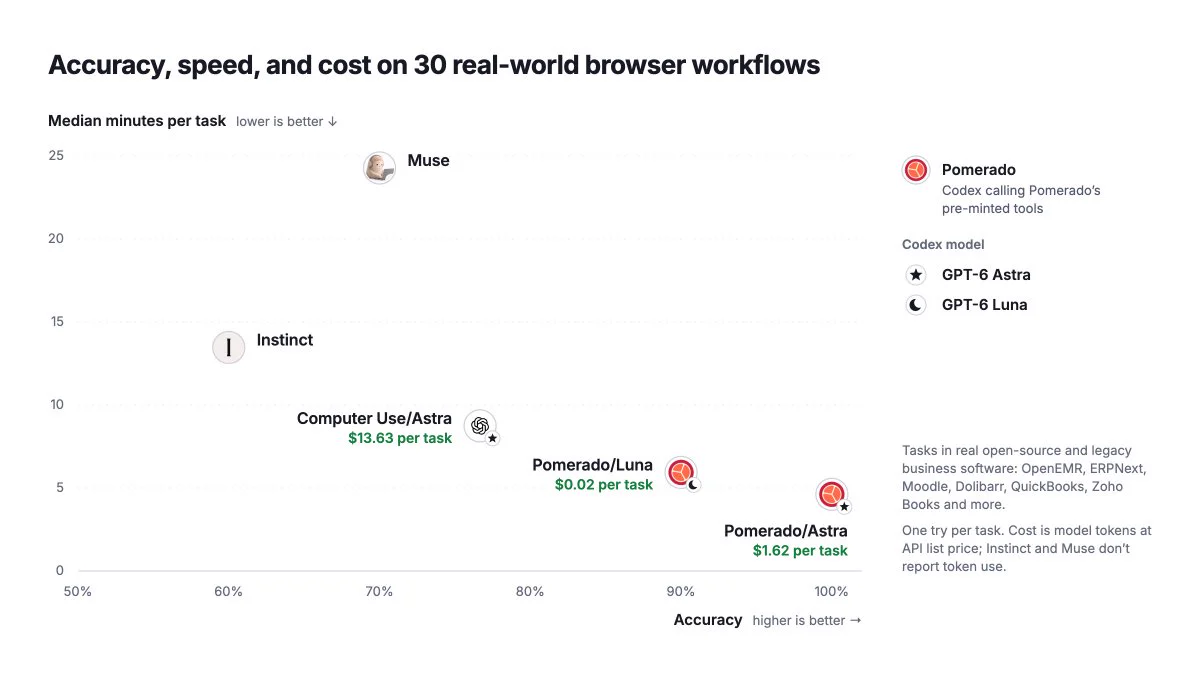
YC F26-backed startup Pomerado officially announced an open-source platform on October 25, 2026 (local time, October 26 KST) that converts arbitrary websites into deterministic APIs and Model Context Protocol (MCP) endpoints in under 30 minutes.
Image source: @akshay_manglik / X To operate across web environments lacking public APIs, autonomous AI agents have predominantly relied on "computer use" workflows that drive full headless or graphical browsers. Pomerado addresses the latency, resource expense, and execution fragility typical of raw browser agents by distilling web interactions into deterministic API pipelines.
Converting Browser Automation into Deterministic HTTP Calls and Playwright Scripts
Pomerado's architecture dynamically builds deterministic APIs on the fly based on natural language user prompts. Instead of relying on real-time browser rendering for every downstream transaction, Pomerado's agents scan the target website's DOM and workflow sequence, translating actions into direct HTTP calls or lightweight Playwright scripts that establish repeatable execution paths.
- Self-Healing Mechanism: When websites update layout structures or DOM elements, the system automatically detects interface shifts and repairs script pathways without requiring human-in-the-loop intervention, preserving response reliability.
- Enterprise and Web Coverage: In addition to standard consumer web tasks for personal assistants, Pomerado targets systems lacking accessible APIs, including ERP, CRM, electronic health records (EHR), and insurance portals requiring authenticated access.
Self-Reported Performance Benchmarks and Real-World Caveats
The Pomerado development team, led by founder Akshay Manglik (@akshay_manglik), shared several comparative benchmarks against conventional browser agents such as Astra, Muse, and Instinct:
- Execution Speed: 2x to 4x faster response times compared to multi-step visual browser execution
- Cost Reduction: 10x to 1000x cost savings by minimizing extended browser context and vision token usage
- Reliability Gains: A self-reported 30% increase in operational reliability via fixed script paths These metrics reflect the development team's internal evaluations, meaning independent third-party benchmarks are needed across diverse web architectures. Furthermore, while the team claims broad support across consumer commerce and transactional portals, actual uptime and reliability will remain subject to site-specific anti-bot protections and web application firewall (WAF) policies.
MIT-Licensed Repository and Managed Cloud Architecture
Pomerado has published its codebase under the permissive MIT license, allowing developers to self-host and customize the pipeline.
- Open-Source GitHub Repository: Source code is available via GitHub (Pomerado/pomerado), enabling teams to deploy and manage locally hosted web APIs within private infrastructure.
- Managed Cloud Platform (pomerado.ai): For organizations seeking turnkey deployment, Pomerado operates a cloud tier providing managed hosting, auto-scaling, credential vaulting, and automated two-factor authentication (2FA). The isolation design ensures autonomous agents execute tasks without direct exposure to sensitive passwords or credentials.
Sources
- GitHub: Pomerado/pomerado
- Akshay Manglik on X (@akshay_manglik): Pomerado Announcement Thread
- Official image source: Akshay Manglik's image post in the announcement thread
- Pomerado Official Website: pomerado.ai