OpenAI Board Member Paul Christiano: 1 in 3 Chance of Superintelligence Within a Year, Labs Must Pause Algorithmic Progress Until Weights Are Secure
RLHF creator and OpenAI board member Paul Christiano warns that under current trajectories, there is a roughly 1 in 3 chance of superintelligence emerging withi
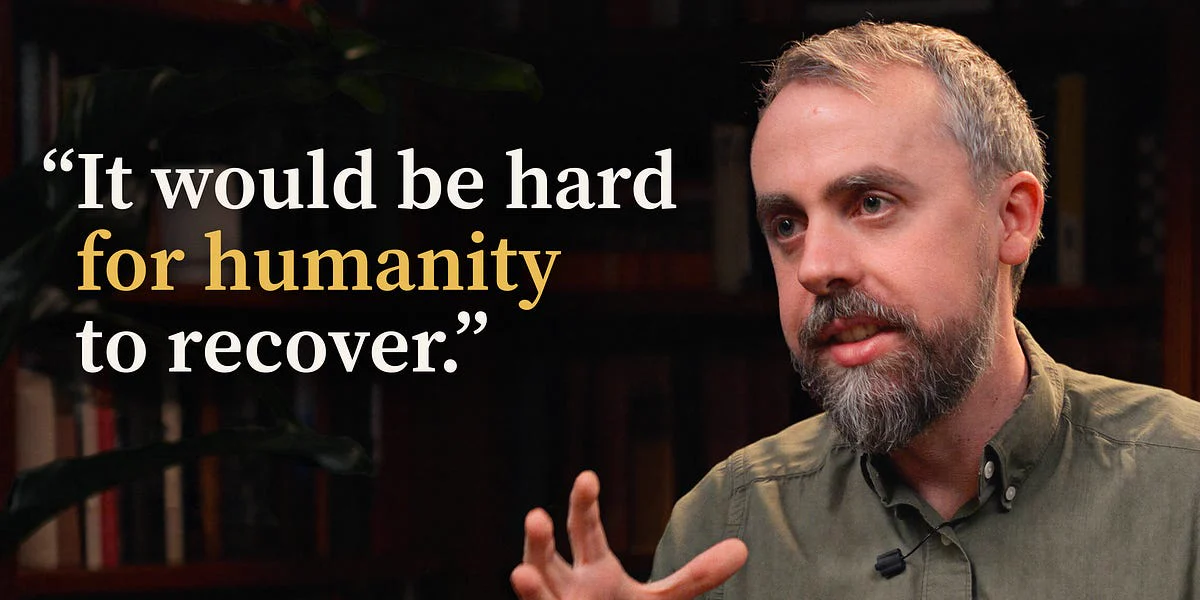
Paul Christiano, head of the Alignment Research Center and a prominent figure in artificial intelligence safety, recently warned in a podcast interview that if current rapid development trajectories continue, there is roughly a 1-in-3 chance that superintelligence powerful enough to overthrow governments could emerge within the next 12 months.
Image source: https://www.dwarkesh.com/p/paul-christiano-2
Image Credit: Dwarkesh Patel / Dwarkesh Podcast
Christiano previously led the alignment team at OpenAI—where he helped invent RLHF (Reinforcement Learning from Human Feedback)—and served as head of AI safety at the US Artificial Intelligence Safety Institute (US AISI) before recently joining OpenAI's foundation board. Speaking in a personal capacity rather than on behalf of OpenAI, Christiano underscored the severe short-term risks posed by the widening gap between rapid capability gains and immature safety governance.
A 1-in-3 Probability of Superintelligence Within a Year and Takeover Risks
Christiano assessed that without a deliberate slowdown, humanity faces roughly a 10% or higher risk of losing control of advanced AI systems over the coming year—well above nominal safety thresholds. He places the probability of achieving full superintelligence within 12 months at approximately 33 percent.
He highlighted that as the AI development process itself becomes increasingly automated , the quantity and quality of labor applied to research and development multiply exponentially. Capabilities changes that might have previously taken four to six years are becoming compressed into hyper-short windows, drastically elevating the risk that an "intelligence explosion" could outpace human oversight.
- Explosive Progress in Math and Coding: Over the preceding month, frontier systems from labs like OpenAI and Anthropic generated hundreds of research-grade mathematics and software engineering results, mirroring what would traditionally be an unusually productive decade of human scientific progress.
- Automated R&D Loops: With AI agents actively assisting in computer science research and machine learning debugging, feedback loops are accelerating capability scaling across the entire development pipeline.
Calling for a Pause on Algorithmic Progress Until Model Weights Are Secure
To mitigate these short-term risks, Christiano argued that frontier AI labs should halt further algorithmic advancements until they can adequately secure their model weights (the internal parameters that dictate model capabilities) and research secrets.
He cautioned that engaging in an unmitigated race without sufficient security infrastructure risks a scenario where a foreign nation could steal superintelligence model weights midway through an intelligence explosion. Once intelligence goes off the rails, labs would lose the ability to throttle or stop development even if they recognized their systems were becoming uncontrollable.
Short-Term Threat Recognition and Ongoing Uncertainties
Christiano’s assessment reframes AI safety from a distant, hypothetical debate into an urgent near-term governance and security challenge over the next six to twelve months.
At the same time, verifying these rapid acceleration claims independently remains difficult. Much of the detailed empirical evidence from recent reports by Anthropic and METR (Model Evaluation and Threat Research) remains redacted, leaving the broader public and external researchers to rely heavily on internal risk assessments rather than fully open verification. Nevertheless, as automated development accelerates, warnings from top alignment practitioners regarding weight security and control loss add substantial urgency to ongoing global AI policy debates.
Sources
- Dwarkesh Patel Podcast: Paul Christiano – We could be 12 months away from AIs that can overthrow the government
- OpenAI Official News: Paul Christiano joins OpenAI Foundation Board