Studying References with an Opus 5.5 Motion Prompt Library
How to use prompt-motion.com, a motion and production prompt library built with Opus 5.5 and introduced by LOOPY (@VibeEverything): browse product launch videos
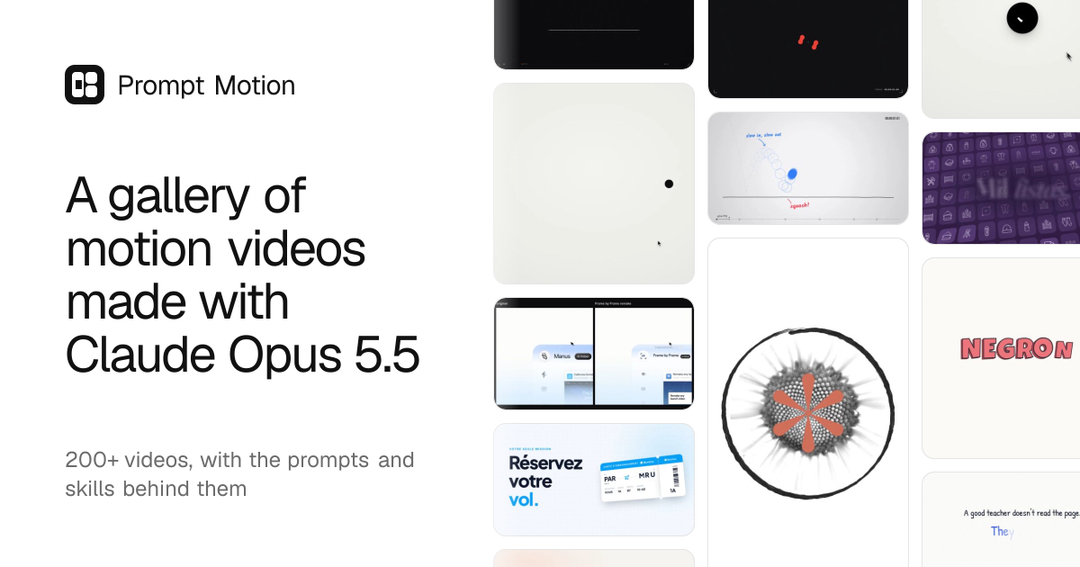
The original author is LOOPY (@VibeEverything), who introduced prompt-motion.com — a motion and production prompt library built with Opus 5.5 — in an X post dated October 9, 2026.
Image source: X @VibeEverything 게시 첨부 영상 / prompt-motion.com
The site gathers video references in one place, from product launch videos to kinetic typography and showreels. According to the author, each work ships with a published prompt you can copy, or a skill you can install and use.
How to use it
The author's suggested method is simple: have Claude analyze the published prompt of a reference you like, extract its scene composition, transitions, and motion direction, then adapt those elements to your own project.
- Visit prompt-motion.com and browse references in the category you care about (product launch videos, kinetic typography, showreels, and more).
- Copy the published prompt of a work you like.
- Ask Claude to analyze that prompt and break down its scene composition, transitions, and motion instructions.
- Adapt the extracted elements to your own brief. In a follow-up reply, the author added a personal impression that Opus 5.5 produced good first drafts of video prompts.
Caveats
This article covers only what the original introduction post contains. Specific install commands, supported clients, pricing, or skill installation steps are not in the source, so please verify them directly on prompt-motion.com before use. The remark that Opus 5.5 writes better video prompts is the author's personal impression, not an independently verified benchmark.
Original source
- Original post by LOOPY (@VibeEverything): Motion and production prompt library built with Opus 5.5
- Library site: prompt-motion.com