Node Banana 2.0 Released: Open-Source AI Visual Workflow Editor Adds ComfyUI Node Embedding and Subscription-Backed Agents
Node Banana 2.0 launches as an open-source visual editor, adding ComfyUI node embedding and an AI agent powered by local Claude and Codex subscriptions.
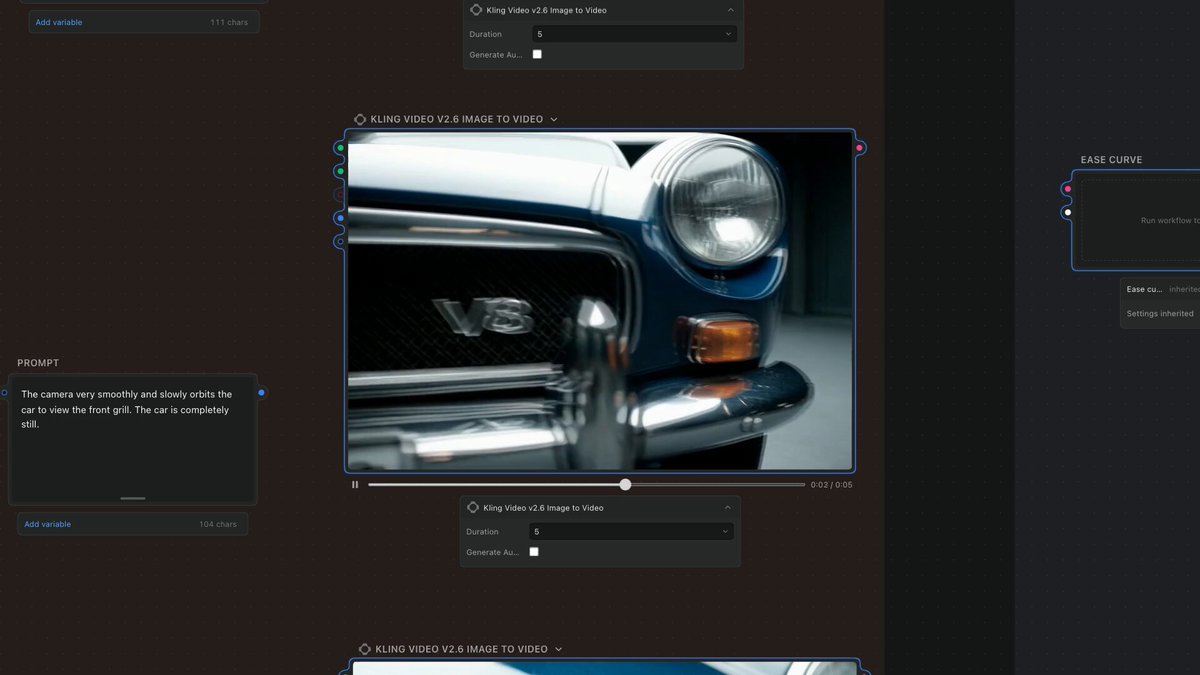
On October 6, 2026, developer Willie (@ReflctWillie) officially announced the release of Node Banana 2.0, the biggest architecture update yet for the open-source visual AI workflow editor, alongside a standalone macOS desktop application. Maintaining its 100% free, MIT-licensed open-source model and bring-your-own-key (BYOK) architecture, the update dramatically reduces setup friction for creators building multimodal generative AI pipelines.
Image source: willie (@ReflctWillie / X)
The 2.0 release eliminates manual Git clones and complex dependency builds in favor of a native desktop application, integrates an AI agent capable of manipulating the canvas using existing Claude Code or Codex subscriptions, allows full ComfyUI workflows to be embedded as modular nodes, and introduces batch execution, parallel processing, and an integrated asset management library.
Standalone Desktop Packaging and Zero-Config Local Setup
The most immediate enhancement in Node Banana 2.0 is the complete simplification of installation and day-to-day operation.
While earlier releases required cloning the GitHub repository and manually managing local runtime and package dependencies in the terminal, version 2.0 provides a standalone installer directly from the official website (nodebanana.app).
- 100% Free and MIT-Licensed: The entire codebase remains open source, with zero platform fees, metered markups, or recurring editor subscriptions.
- BYOK (Bring Your Own Key) Security: Commercial API tokens for multimodal image, video, audio, and language generation remain stored strictly on the local machine and are never routed through proprietary middleman servers.
- Initial macOS Deployment: The standalone desktop package is currently distributed for macOS. A Windows release is planned to follow shortly once the developer receives a replacement CPU.
Canvas Automation Agent Powered by Local Claude and Codex Subscriptions
Node Banana 2.0 introduces a native AI agent designed to automatically assemble, wire, and modify visual pipelines from natural language instructions.
Crucially, the agent does not require dedicated third-party agent API credits or recurring platform fees. Instead, it operates using Claude Code or Codex on the creator's machine, providing installation commands in the panel if the tool is not yet installed.
- Direct Account Reuse: By signing in through the browser with an existing Anthropic Claude paid subscription or ChatGPT plan supporting Codex, users can drive the agent within their active subscription quotas without additional token billing.
- Natural Language Pipeline Construction: Users describe desired processing steps, model combinations, and transformation chains, and the agent dynamically places the necessary nodes, sets configuration parameters, and connects the corresponding noodles.
- Guarded Pre-Execution Review: The agent presents proposed node structures, model selections, and routing noodles on the visual canvas, allowing operators to visually inspect and fine-tune every parameter before triggering generation.
Embedding ComfyUI Workflows as Modular Canvas Nodes
Integration with ComfyUI, the standard node environment for open-weight diffusion models, has been fundamentally elevated in Node Banana 2.0.
Creators can drag and drop existing ComfyUI workflow files (.json) directly onto the Node Banana canvas, where the entire subgraph is encapsulated into a single reusable node.
- App Mode Interface Mapping: Key input parameters defined in ComfyUI's App Mode automatically map to typed connection handles on the Node Banana node, while control widgets appear directly within an inline settings panel.
- Hybrid Local and Cloud Pipelines: Creators can seamlessly route outputs from local ComfyUI workflow pipelines directly into cloud-based multimodal generative APIs (such as video, image, or 3D generation), LLM prompt enhancement nodes, or audio processors in one continuous visual flow.
Batch Processing, Asset Management, and Canvas Ergonomics
To support complex, high-throughput production work, Node Banana 2.0 also incorporates a comprehensive suite of practical operational upgrades.
- Batch Runs and Parallel Processing: Pipelines can execute multiple prompts, random seeds, or parameter variations concurrently through native batch scheduling.
- Unified Asset Library: Generated media outputs are indexed in an integrated asset manager, where opening an asset from the library restores the workflow and prompt configuration that generated it.
- Noodle Labeling and Visibility Controls: In complex graphs with dozens of interconnects, users can label connection noodles and hide non-essential paths to maintain visual clarity.
- UI Ergonomics and macOS Performance Overhaul: The canvas engine now resizes nodes cleanly without clipping text or controls, the inspector panel is fully resizable, model discovery is faster, and overall rendering performance across macOS has been comprehensively optimized.
Sources
- Node Banana Official Website: nodebanana.app
- Willie on X (@ReflctWillie): Node Banana 2.0 Release Announcement
- Node Banana Documentation: Agent Integration Guide
- GitHub Repository: shrimbly/node-banana