Google Rolling Out Custom MCP Support on Gemini Desktop App and Web
Google has begun gradually rolling out custom Model Context Protocol (MCP) server support for Gemini desktop and web users. The update enables custom local and
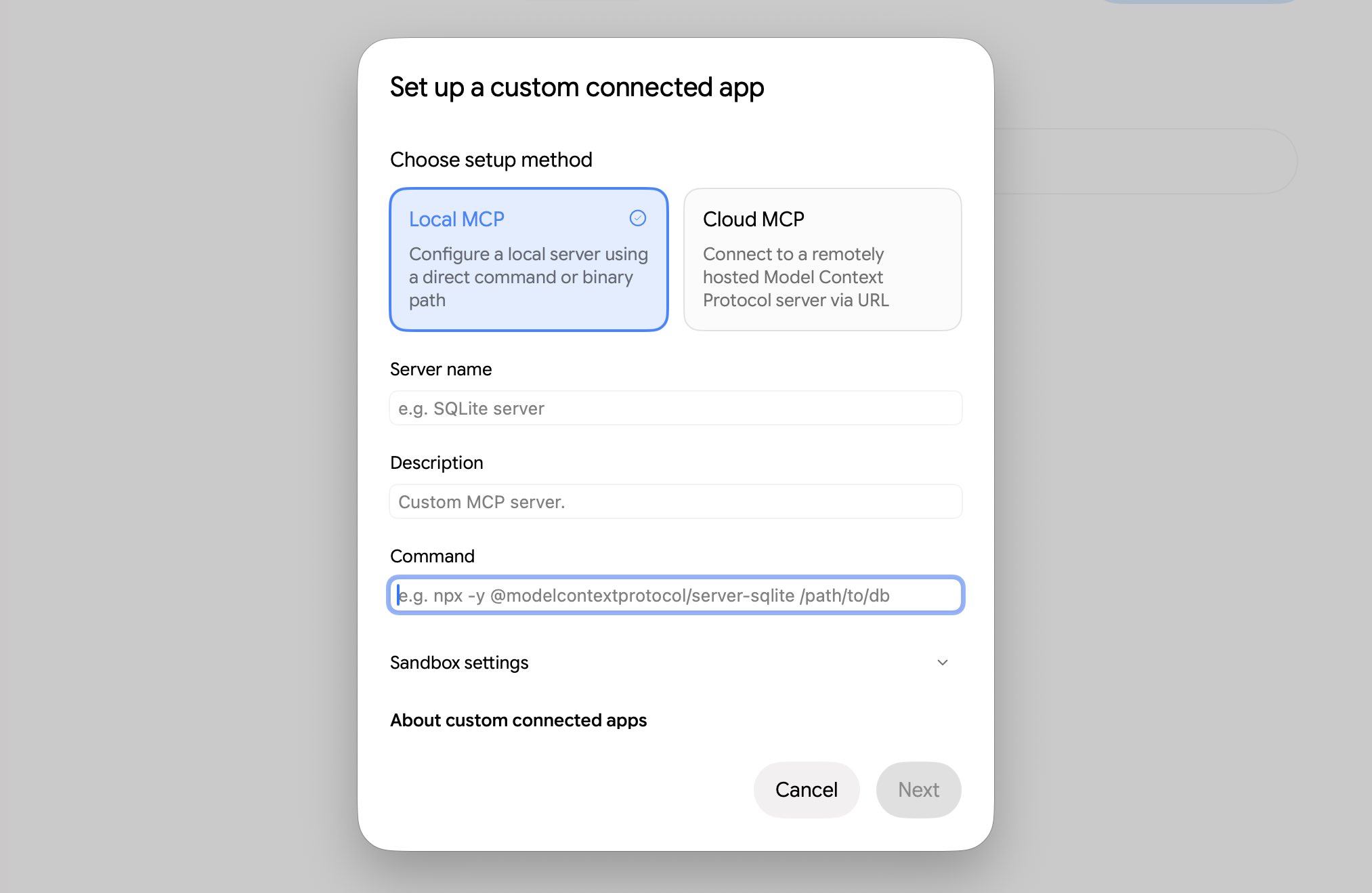
On October 13, 2026, reports surfaced that Google has started rolling out custom Model Context Protocol (MCP) support to select users across the Gemini desktop application and web client. The update is currently deploying via a phased staged rollout (canary/A-B release), giving early users the ability to connect their own locally hosted or remote tool servers directly into the Gemini interface.
Image source: @testingcatalog / X
Custom MCP Integration Across Desktop and Web Workspaces
Originally introduced as an open standard by Anthropic, the Model Context Protocol (MCP) defines a standardized interface connecting AI models to local resources, databases, and development tooling. While Gemini previously focused primarily on proprietary Google Workspace extensions such as Google Drive and Gmail, this update introduces dedicated configuration menus for user-defined custom MCP servers.
According to early user sightings and interface captures, users have observed configuration menus allowing them to register and connect user-defined custom tool servers directly within Gemini. While the exact supported transport specifications—such as local process communication (stdio) versus remote HTTP endpoints—await formal confirmation in official documentation, the custom MCP configuration entry point has surfaced not only within the dedicated Gemini desktop client, but also across select Gemini Web sessions. This architecture allows developers and power users to explore wiring Gemini directly into personal project databases, local workflows, and internal tools without manual copy-pasting.
Synergy with Computer Use and Next-Gen Gemini Capabilities
The phased arrival of custom MCP support comes amid growing anticipation for Google's broader agent roadmap. Observers point to upcoming updates around Gemini 4, alongside features currently in testing such as GUI-driven 'Computer Use' and multi-step 'Superprojects' workflows.
If paired together, custom MCP and Computer Use could form a comprehensive agent stack: Computer Use directly navigates desktop applications that lack native programmatic endpoints, while custom MCP servers handle structured data feeds, execution scripts, and local APIs. However, Google has not officially confirmed general availability timelines or whether Gemini 4 advanced agent tooling will extend to Gemini Pro tier subscribers.
Security Realities of Local Tool Execution and Deployment Caveats
While custom protocol extensibility significantly expands Gemini's utility, executing local tools directly from desktop AI clients introduces concrete security considerations:
- Phased Rollout Status: This functionality represents an unannounced canary or A/B deployment rather than an official global general availability release. Feature availability varies by account, region, and operating system.
- Host Sandbox and Privilege Isolation: Wiring unvetted local MCP servers to file execution commands or shell subprocesses exposes host systems to prompt injection vectors. Without robust operating system sandbox boundaries, malicious payloads ingested over public data streams could attempt host-level execution exploits.
- Unconfirmed Specification Boundaries: Official documentation detailing transport guarantees, persistent session policies, and subscription-tier availability remains pending Google's formal release.
Sources
- TestingCatalog on X (@testingcatalog): Google custom MCP rollout report on Gemini desktop app