8 Trending GitHub AI Agents and Dev Tools: From Orca Parallel Worktrees to Google ARTEMIS Phone Control
A comprehensive breakdown of 8 trending open-source tools on GitHub, spanning Orca's parallel git-worktree agent orchestration, Google's ARTEMIS mobile automati
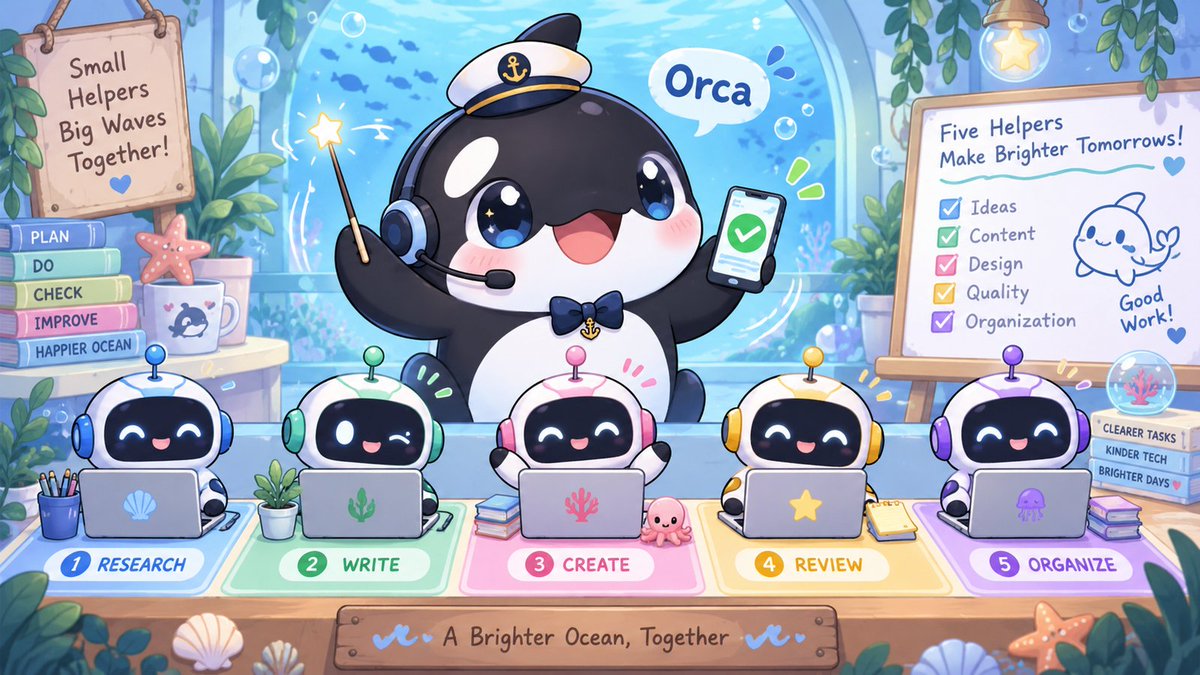
The open-source developer tooling ecosystem is rapidly shifting beyond sequential single-prompt terminal chats toward multi-agent parallel orchestration and direct, low-level device control. In mid-October 2026, GitHub's trending repositories were dominated by tools designed to run multiple command-line coding agents concurrently across isolated workspaces, alongside natural-language automation engines capable of manipulating physical mobile devices.
Image source: X @UniverseB1020
Here is a technical overview of eight standout open-source projects—Orca, pstack-claude, cursor/plugins, text-to-cad, Anatomy, Google ARTEMIS, Android skills, and BRUTAL—covering their core architectures, target developer workflows, and critical security and licensing caveats to evaluate before adoption.
Parallel Worktree Orchestration and Autonomous Debugging: Orca and pstack-claude
As AI-assisted coding matures, waiting on a single terminal agent to complete complex refactors has become a primary productivity friction. Developers are turning to concurrent execution models.
- Orca (⭐94k): A desktop application that orchestrates CLI coding agents—such as Claude Code, Codex, and OpenCode—by provisioning each agent into its own isolated
git worktreein parallel. It includes a companion mobile application that allows engineers to check task completion remotely. The system uses the developer's existing agent subscriptions directly. - pstack-claude (⭐2.5k): An unofficial port of Lauren Tan's official Cursor plugin
pstack, adapted for cross-harness compatibility across Claude Code, Codex, Pi, and Copilot. Triggered by natural prompts like"fix this bug in poteto-mode", the tool autonomously executes an end-to-end debugging loop: reproducing the failure, inspecting the codebase, authoring a patch, and running automated regression verification.
Integrated Plugin Collections and Mobile Device Control: cursor/plugins and Google ARTEMIS
Fragmented scripts and standalone utilities are increasingly coalescing into structured plugin directories, while the Model Context Protocol (MCP) expands agent agency onto mobile operating systems.
- cursor/plugins (⭐12k): The official collection of plugins curated by Cursor. The suite packages the original pstack workflow, the Thermos code review tool, Orchestrate for cloud-based parallel agents, and dedicated service connectors for Gmail, GitHub, and X.
- Google ARTEMIS (⭐12k): An automated testing and control tool that manipulates physical Android devices and emulators using natural-language instructions like a human user. Operating via MCP, ARTEMIS connects directly into runtimes such as Claude Code, Codex, and Antigravity. It requires an emulator or a real Android device with USB debugging enabled, processing commands like
"open settings and check battery". However, the benchmark claim of achieving over 99% task completion on AndroidWorld remains a self-claim by the developers.
Domain-Specific Generation Skills and Low-Level Engines: text-to-cad, Anatomy, Android Skills, and BRUTAL
Beyond standard application programming, specialized agent skills and low-level frameworks are tackling hardware CAD design, visual architectural explainability, and native graphics.
- text-to-cad (⭐21k): A specialized plugin enabling agents to generate 3D CAD models from natural-language descriptions, exporting assets into STEP, STL, and 3MF formats. It performs manufacturability checks, generates drawings, and connects with 3D printing and CNC vendors. It requires Python 3.11+, Node.js 20+, and
uv. - Anatomy (⭐13k): An agent skill designed to illustrate technical concepts by generating interactive isometric SVG and WebGL schematics of functioning machines. When asked to
"explain the token bucket algorithm", Anatomy visualizes the mechanism as a physical machine, depicting cache keys as physical padlocks. Distributed under an MIT license, it requires Node.js 20.10+ without external API keys. It natively supports Claude Code, Codex, OpenCode, and Antigravity, though its rendering pipeline strictly depicts machinery and tools rather than abstract charts or people. - Android skills (⭐7.9k): A curated collection of agent skills released by Google's official
androidorganization. Designed to address common LLM blind spots in Android engineering, the skills assist with areas such as R8 analysis and Wear Compose. Standard installation provisions only the baseandroid-cliutility; developers requiring the complete skill catalog must specify the--allflag. The project currently operates under an internal policy and does not accept external contributions. - BRUTAL (⭐1.4k): A C# game framework underlying the Waylith engine, which was used to port RimWorld away from Unity. BRUTAL features an architecture without an integrated visual editor or renderer, directly interfacing with Vulkan and native platform APIs. It requires the .NET 10 SDK on Windows or Linux systems and is not an AI tool.
Security Telemetry, Licensing Ambiguities, and the Human Review Bottleneck
While these trending utilities offer substantial workflow leverage, adopting them in professional and enterprise environments introduces several operational risks and governance requirements.
First, default telemetry collection requires active mitigation. Orca enables anonymous telemetry collection out of the box, necessitating manual deactivation in sensitive engineering setups. Similarly, text-to-cad collects usage metrics by default; teams must explicitly disable data reporting via uvx cadgen telemetry off. Additionally, installing text-to-cad concurrently as both a plugin and a skill causes the skill to appear twice in the catalog.
Second, external data routing impacts proprietary codebases. Autonomous debugging cycles in pstack-claude stream session records to the underlying foundation model provider, requiring caution before use on private corporate codebases. Cursor's external integration plugins route data through third-party services such as Gmail, GitHub, and X. For Google ARTEMIS, the screen is directly viewed by multimodal models, making it essential to operate exclusively on isolated test accounts free of sensitive production credentials.
Third, licensing ambiguities demand legal review. The cursor/plugins repository lacks an explicit open-source license file in its root directory, creating potential compliance hurdles for commercial organizations. The BRUTAL game framework utilizes a custom derivative of the MIT license that mandates logo attribution in commercial game releases, disqualifying it from standard Open Source Initiative (OSI) approval.
Finally, human code review remains the primary operational bottleneck. While tools like Orca simplify running five or more CLI agents concurrently across separate worktrees, the engineering overhead of triaging, reviewing, and clicking the merge button still rests entirely on a single human maintainer. As parallel agent generation accelerates, human review capacity dictates the actual delivery velocity.
Sources
- X (@UniverseB1020): GitHub Trending Dev Tools Summary