Genex Unveils Open-Source Desktop Harness for AI Game Development with Three.js, Local Models, and Subscription Support
Genex has launched v0.1.0 of its open-source (MIT) desktop studio app, orchestrating AI coding agents, Blender, and 3D generation tools to build Three.js browse
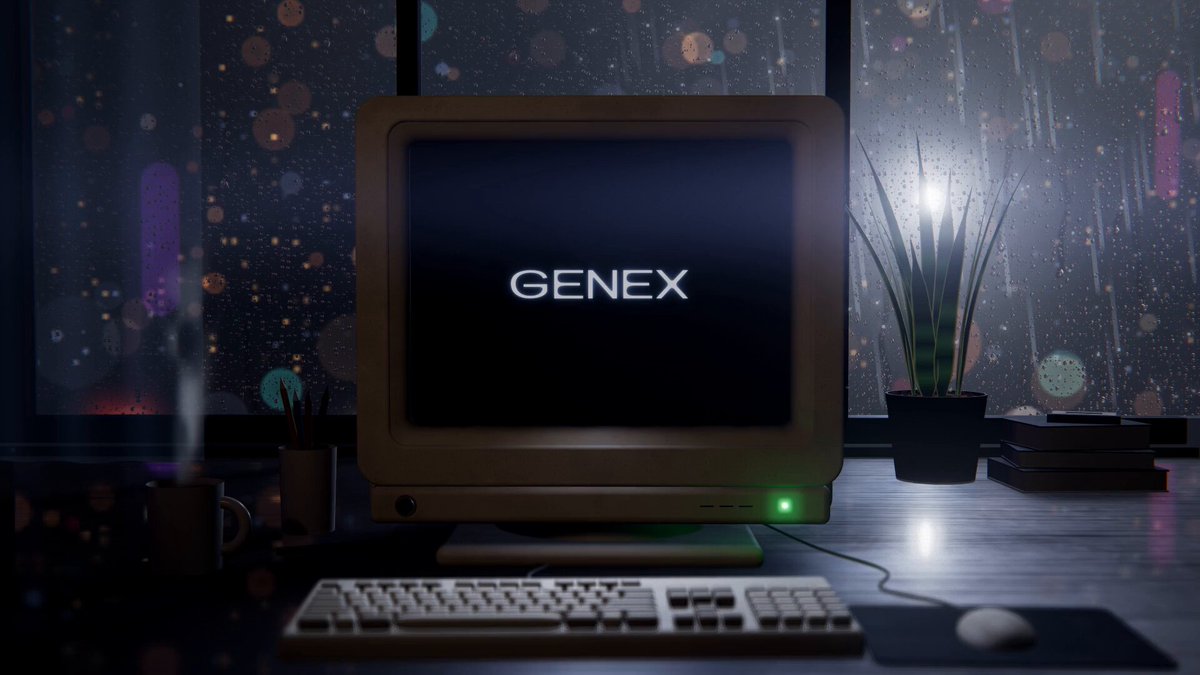
On October 5, 2026, AI game development tooling project Genex officially announced the first public preview release (v0.1.0) of its open-source desktop studio harness designed for building Three.js browser games. Distributed under the MIT license, the desktop app is architected not as a standalone game engine, but as a specialized orchestration harness that coordinates AI coding agents and external creative tools around an independent Three.js codebase.
Image source: @genex_games via X
Conventional AI-assisted development workflows have frequently suffered from severe fragmentation: code generation, 3D asset modeling, in-browser visual inspection, and playtesting have historically operated in isolated silos requiring manual developer stitching. Genex directly tackles this friction by unifying existing coding agents, local tools, and live previews into a consolidated desktop studio.
Multi-Agent Studio Architecture Centered on Three.js Browser Games
The initial scope of the Genex desktop app centers squarely on Three.js browser games.
Projects are maintained as standard local files directly on the user's filesystem rather than being locked inside proprietary cloud sandboxes or opaque binary formats. Developers retain complete ownership of their code, allowing them to export static web bundles ready for deployment onto any hosting infrastructure or publish them directly via Genex.
- Local and External 3D Toolchain Integration: Genex links directly with locally installed Blender instances to automate 3D modeling, rigging, and GLB export. It also integrates with external generative pipelines, including Meshy and Tripo for prompt-driven 3D assets and character creation, alongside ElevenLabs for sound effects and voice generation.
- Multi-Agent Role Distribution: The workflow allows creators to designate distinct models for planning, building, and judging game candidate iterations, providing continuous visual feedback in a live preview viewport.
- Clear Separation of Open Source and Paid Services: The desktop harness is entirely open source under the MIT License. The only commercial tier is optional asset generation routed through the Genex cloud plugin, ensuring that core orchestration access remains strictly decoupled from generative asset billing.
Keyless Subscription Integrations (Claude Code, Codex) and Local Model Support
A prominent design highlight of Genex is its ability to tap into major commercial AI reasoning tiers using existing user subscriptions without mandating per-token API keys.
- Claude Code and Codex CLI Integration: The application interfaces directly with standalone Claude Code (backed by a Claude subscription) and Codex CLI (backed by a ChatGPT subscription) installations running on the developer's system. Genex never handles or stores user authentication tokens, and requests operate strictly within the user's existing subscription quotas without incurring per-call fees.
- Offline and Local Model Support: In addition to cloud subscriptions, developers can connect open-weight local models via Ollama. On Apple Silicon hardware, Genex supports on-device Bonsai models downloaded directly through the application's settings menu.
This dual-tier support allows game creators to flexibly combine cost-effective local compute with premier cloud reasoning according to task demands and privacy requirements.
Exo-Inspired Self-Improving Loop, Platform Availability, and Engine Roadmap
To bolster development stability over iterative prompting cycles, Genex incorporates an experimental self-improving harness mechanism based on the Exo harness.
- Self-Improving Mechanism: Tools, skills, and prompts reside within a local git repository that the system can programmatically update. The harness captures snapshots prior to candidate code modifications, subjecting rounds to automated build checks, playtests, and blind game evaluations before committing or rolling back changes. By analyzing build failures, runtime tool crashes, and browser console errors, Genex rewrites agent skills. This capability remains experimental and is disabled by default.
- Platform Availability and Current Limits: Initial preview packages are currently available for macOS and Linux (via .deb and .rpm packages for x86_64). On Linux, the sandbox environment depends on bubblewrap, socat, and ripgrep, with open issues noted around Ubuntu 24.04 sandbox policies and window controls. Intel-based macOS builds remain untested.
- Forward Roadmap: A native Windows release is currently undergoing code-signing certificate approval and is expected shortly. Beyond the initial Three.js web scope, official integration plugins for Unity, Unreal Engine, and Roblox Studio are featured on the forward roadmap.
Sources
- GitHub Releases: genex-games/genex-desktop v0.1.0
- Genex Official X (@genex_games): 2026-10-05 Genex Desktop Release Announcement
- Genex Desktop Product Page: Genex Desktop