CopilotKit Releases OpenDuet: Self-Hostable Proactive AI Agent Template
CopilotKit launched OpenDuet, an open-source MIT template for proactive AI coworkers with human-in-the-loop approvals, workspace isolation, and morning triage.
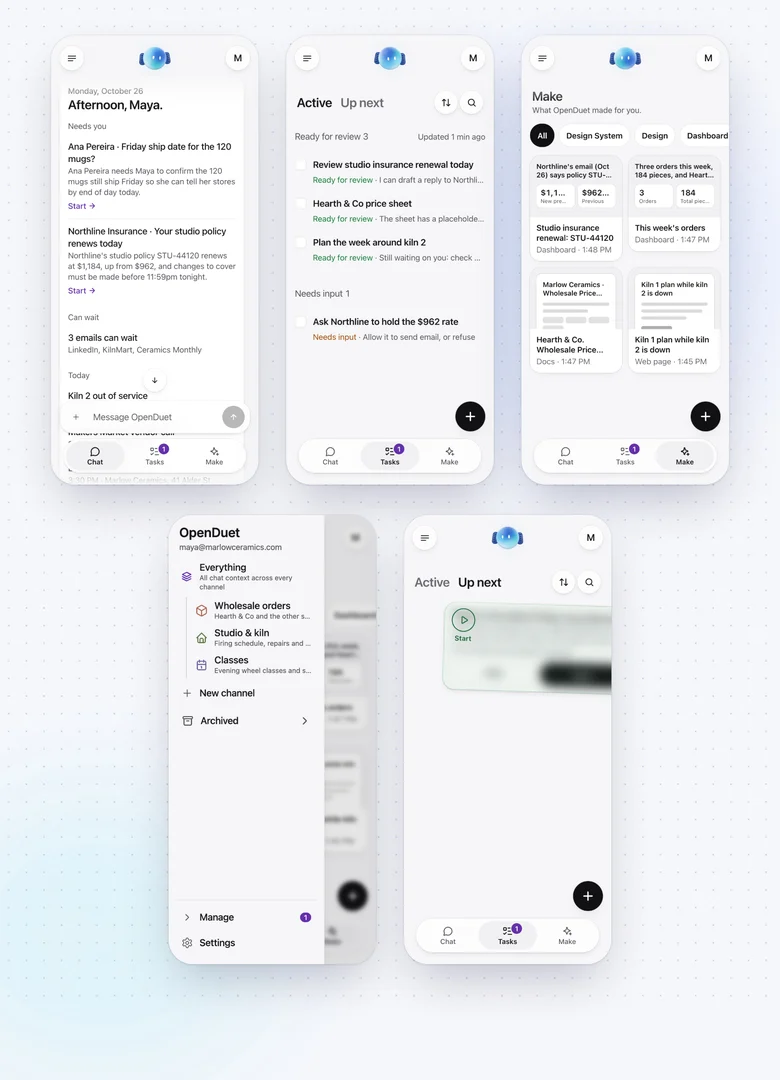
CopilotKit announced OpenDuet in its official blog on October 27, 2026. Atai Barkai then introduced the project on X on October 28 (KST). Built on CopilotKit and OpenBot, this MIT-licensed open-source template offers a starting point for self-hosted, proactive AI coworkers.
Image source: https://github.com/CopilotKit/OpenDuet
Unlike reactive chat interfaces that wait for explicit prompts, OpenDuet acts autonomously by running scheduled routines, organizing email triage, and preparing morning executive summaries. All execution runs within dedicated local environments while enforcing human approval before irreversible actions occur.
Isolated Workspace Environment and Proactive Background Execution
The defining architectural characteristic of OpenDuet is providing each agent with an isolated execution sandbox rather than taking control of the user's primary operating system.
Every agent instance operates inside its own /workspace directory, dedicated shell session, and dedicated headless browser instance, continuing background tasks while the user is away.
- Morning Brief and Triage: Inspects Gmail, Google Calendar, and Slack to surface pressing items needing user decisions while holding non-urgent items until scheduled review times.
- Persistent Background Tasks: Continues multi-step research, document authoring, or triage independently, notifying the user only upon task completion or when input is strictly necessary.
- Extensible Connectors: Supports governed Model Context Protocol (MCP) integrations including Notion and Google Drive, alongside reusable skills triggered via slash commands.
The project can be self-hosted with a database and foundation model of the operator's choice. Its documented thread and memory features require a separate CopilotKit Intelligence project.
Human-in-the-Loop Approvals and Credential Protection
To mitigate the inherent operational risks of autonomous execution, OpenDuet enforces mandatory approval gates on all mutating actions.
Under its core 'Asks before it acts' security policy, an internal reviewer intercepts high-impact operations—such as sending outbound messages, executing payments, signing documents, or deleting resources.
- Action Approvals: Displays exact execution parameters and recipient details, requiring the operator to select Refuse, Allow once, or Always allow before proceeding.
- Masked Credential Entry: Web authentication inputs use secure masked dialogs where credentials pass directly to destination targets without entering the prompt context seen by the language model.
- Data Egress Auditing: Outgoing communications undergo automated filtering to prevent sensitive numbers, credentials, or private personal data from leaking externally.
Deployment Requirements and Architecture
OpenDuet is marked as an early development project, with active updates underway across its core templates.
Running the repository locally requires Docker, Bun 1.3 or newer, Node.js (for npx CLI operations), an LLM API key, and a free CopilotKit Intelligence project to manage memory and conversational thread state.
All customizations—including agent personas, communication channels, model routing, and specialized skills—are consolidated within the openbot/examples/openduet path, allowing developers to adapt the template for custom organizational workflows.
Sources
- CopilotKit official blog: October 27, 2026 OpenDuet announcement
- Atai Barkai Official X (@ataiiam): 2026-10-28 OpenDuet Announcement
- GitHub Repository: CopilotKit/OpenDuet