Debugging AI Video Motion and Pronunciation Errors: The Codex-Gemini 'AI Debugging AI' Prompt Workflow
Learn how creator @hmmmmmm1458 connected Gemini inside Codex to resolve persistent Korean pronunciation errors and incomplete character actions in Google Flow b
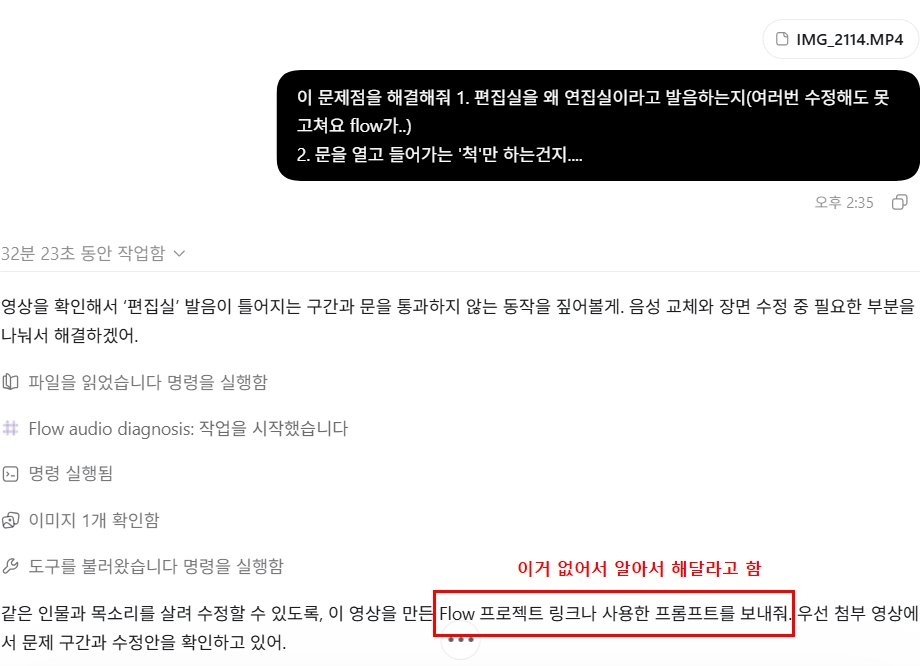
In generative AI video and integrated speech synthesis pipelines, recurring phonetic distortions in non-English dialogue and incomplete character physical motions remain frequent bottlenecks during production. On October 16, 2026, digital creator H (@hmmmmmm1458) shared a practical three-step debugging workflow demonstrating how connecting Google's Gemini reasoning engine within a Codex workspace allows an upstream LLM to formulate targeted, machine-optimized prompt revisions for downstream video generation tools like Google Flow.
Image source: H (@hmmmmmm1458) via X
In conventional AI video pipelines, creators often attempt to fix stubborn bugs by manually stacking descriptive natural-language modifiers or awkward phonetic spellings. However, this manual approach frequently causes diffusion models to hallucinate, altering background lighting, scene composition, or speaker tone. The workflow introduced by @hmmmmmm1458 circumvents manual trial and error by transferring the exact behavioral defect to Gemini, allowing an AI to craft specialized prompt directives tailored to the underlying video model's token processing logic.
Persistent Pronunciation Glitches and Action Inconsistencies in Generative Video
The workflow emerged from a real-world troubleshooting inquiry raised by community creator @jtbs6ee, who encountered stubborn generation defects within Google Flow:
- Korean Speech Pronunciation Glitches: The integrated text-to-speech engine consistently mispronounced the script's word for editing room (pyeon-jip-sil) as yeon-jip-sil, failing to resolve despite multiple manual prompt rewrites.
- Incomplete Character Dynamics: When instructed to depict a character "opening the door and walking inside," the generated video showed the character merely pretending to grasp the handle before freezing, rather than completing the full continuous action.
When human editors intuitively append commands like "pronounce the word correctly" or "open the door all the way," generative video and audio models frequently confuse these semantic instructions with descriptive visual elements, introducing unwanted artifacts into the clip.
The 3-Step Practical Workflow: Bridging Gemini to Codex for 'AI-to-AI Debugging'
The resolution framework shared by H (@hmmmmmm1458) avoids manual prompt guesswork through a streamlined three-step sequence:
- Log into Gemini within Codex: Authenticate and connect a Gemini session inside the Codex workspace, establishing access to a high-capacity reasoning model.
- Submit the Exact Defect and Context: Feed the specific failure symptoms observed in the target platform (such as Google Flow's mispronunciation and incomplete door entry motion) alongside the original prompt context directly into Gemini.
- Apply the Generated Correction: Receive Gemini's re-engineered prompt directives—formulated specifically to target diffusion model kinematics and TTS token constraints—and inject them back into the video generation platform.
The creator emphasized the guiding principle: "Fixing prompt glitches by hand is difficult because humans struggle to anticipate how video models weigh specific tokens. The key is to let an AI issue directives to another AI." Following this guidance, the inquiring creator confirmed that the revised prompt cleanly eliminated both the pronunciation distortion and the frozen motion.
[Structure for Delegating Prompt Fixes to an LLM]
- Observed Issue: Google Flow mispronounces the dialogue word 'pyeon-jip-sil' as 'yeon-jip-sil', and the character only pretends to open the door without entering.
- Task Request: Formulate an optimized prompt directive that forces accurate phonetic articulation and complete physical door entry motion while preserving original shot framing and lighting.
Production Considerations and Maintaining Asset Continuity
While delegating prompt debugging to an upstream LLM offers a fast path to resolving generation failures, creators should manage the following technical constraints:
- Preserving Initial Seeds and Audio Parameters: If the original generation prompt history, random seed values, or TTS voice profiles are not passed alongside the error report, the corrected render may alter the editing room layout or shift vocal timbre. Maintaining comprehensive project context is critical for shot-to-shot continuity.
- Environment and Authentication Setup: Working within this workflow requires pre-configured credentials and active sessions for both Codex and Gemini before encountering generation roadblocks.
- Model Version Variance: Target video platforms such as Google Flow undergo frequent updates and impose distinct context window limits. Prompt adjustments recommended by Gemini should be smoke-tested on single-shot renders before scaling to full timelines.
Original source
- H (@hmmmmmm1458) Post on X: AI Video and Pronunciation Debugging Workflow