Beyond Leaderboards: Proposing RPG Stat Sheets for AI Model Evaluation
A fresh proposal suggests moving away from linear AI model leaderboards, advocating instead for multi-dimensional RPG-style stat sheets to evaluate artificial i
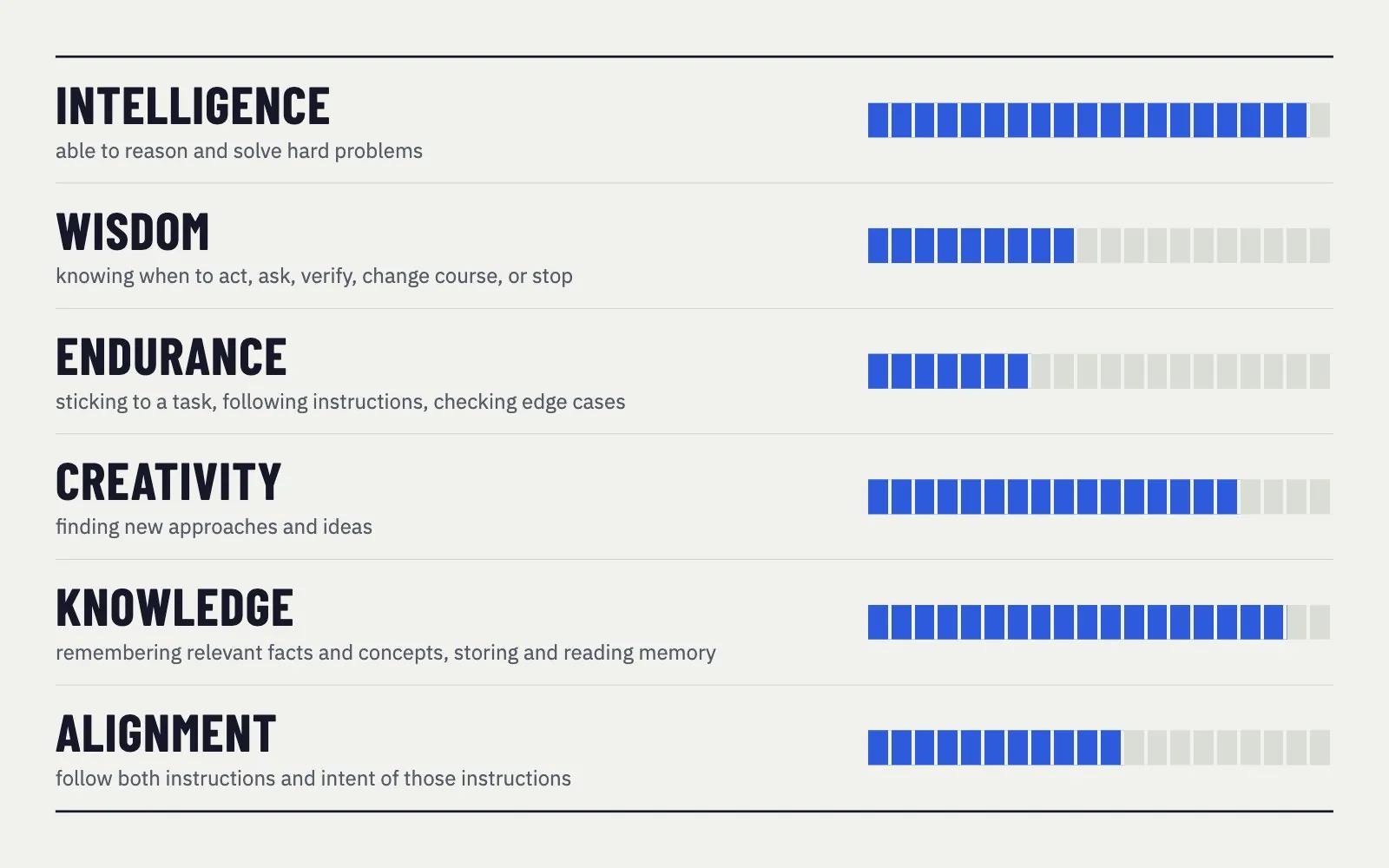
When comparing modern artificial intelligence (AI) models, the most ubiquitous tool has long been the linear leaderboard—a single ranked list aggregating benchmark scores. However, critics have long pointed out that a single composite score or ranking fails to capture the complex, nuanced characteristics of massive large language models (LLMs) and multimodal systems.
Amid these ongoing limitations, developer Thariq (@trq212) proposed a creative alternative on social media on November 28, 2026: scoring AI models more like a role-playing game (RPG) character's stat sheet rather than relying on traditional leaderboards. The concept quickly captured the attention of the developer community.
Image source: https://x.com/trq212/status/2126386932989210714
This proposal challenges the conventional practice of judging an AI model's excellence based on a handful of benchmark scores—standardized test suites designed to objectively measure AI performance. By shifting away from a uniform ranking, the approach aims to eliminate the massive information loss that occurs when distinct model strengths and weaknesses are compressed into a single number.
Multi-Dimensional Evaluation Through Claude and Codex Image Generation
To illustrate the practicality of the concept, the author shared a case study comparing image generation outputs from Anthropic's Claude and another model, Codex, mapping their results onto multi-dimensional stats.
- Claude's Output: Demonstrated deep contemplation of the problem and excelled in overall execution and creativity, which can be translated in RPG terms as high 'Creativity' and 'Endurance'.
- Codex's Output: Closely adhered to the spirit of the user's prompt, scoring high in 'Wisdom' and 'Alignment'—the degree to which an AI aligns with human intent and values.
Neither model outright dominates the other; instead, each exhibits distinct characteristics across different domains. Under a traditional leaderboard, one would simply outrank the other, but an RPG stat-sheet framework allows users to intuitively discern which model fits their specific use case.
Community Discussions and Expanded Evaluation Metrics
Shortly after the proposal was published, numerous developers and evaluation (eval) specialists joined the discussion, expanding the concept with further refinements.
During the exchange, participants proposed adding several granular metrics to complement initial traits like creativity, endurance, wisdom, and alignment. Suggested additions included 'Clarity' for communication effectiveness, 'Communication tier', 'Empathy', 'Perception', 'Adaptability', and 'Precision'.
Developers noted that if independent evaluation suites could be built for each of these distinct stats, it would provide a much more holistic understanding of a model's unique personality and capability profile. This shifts the core question from "Which model is ranked number one overall?" to "Which stat profile is optimized for the specific problem I need to solve?"
Challenges of Quantification and Future Implications
Of course, this conceptual proposal has not yet been formalized into an official industry standard benchmark. Evals experts have noted that objectively quantifying qualitative characteristics remains a notoriously difficult challenge, much like trying to do the same for humans.
Nevertheless, the discussion highlights a vital shift in perspective: the AI evaluation ecosystem must evolve beyond simple score races to better reflect the multidimensional realities of deployment environments. While still a conceptual idea, the RPG stat-sheet framework offers a compelling vision for how future AI model evaluations might better capture true capability.