The Strict Error Margin and Societal Double Standards Demanded of AI
An exploration of the developer community's insights into how artificial intelligence and autonomous systems face error thresholds 100 times stricter than human
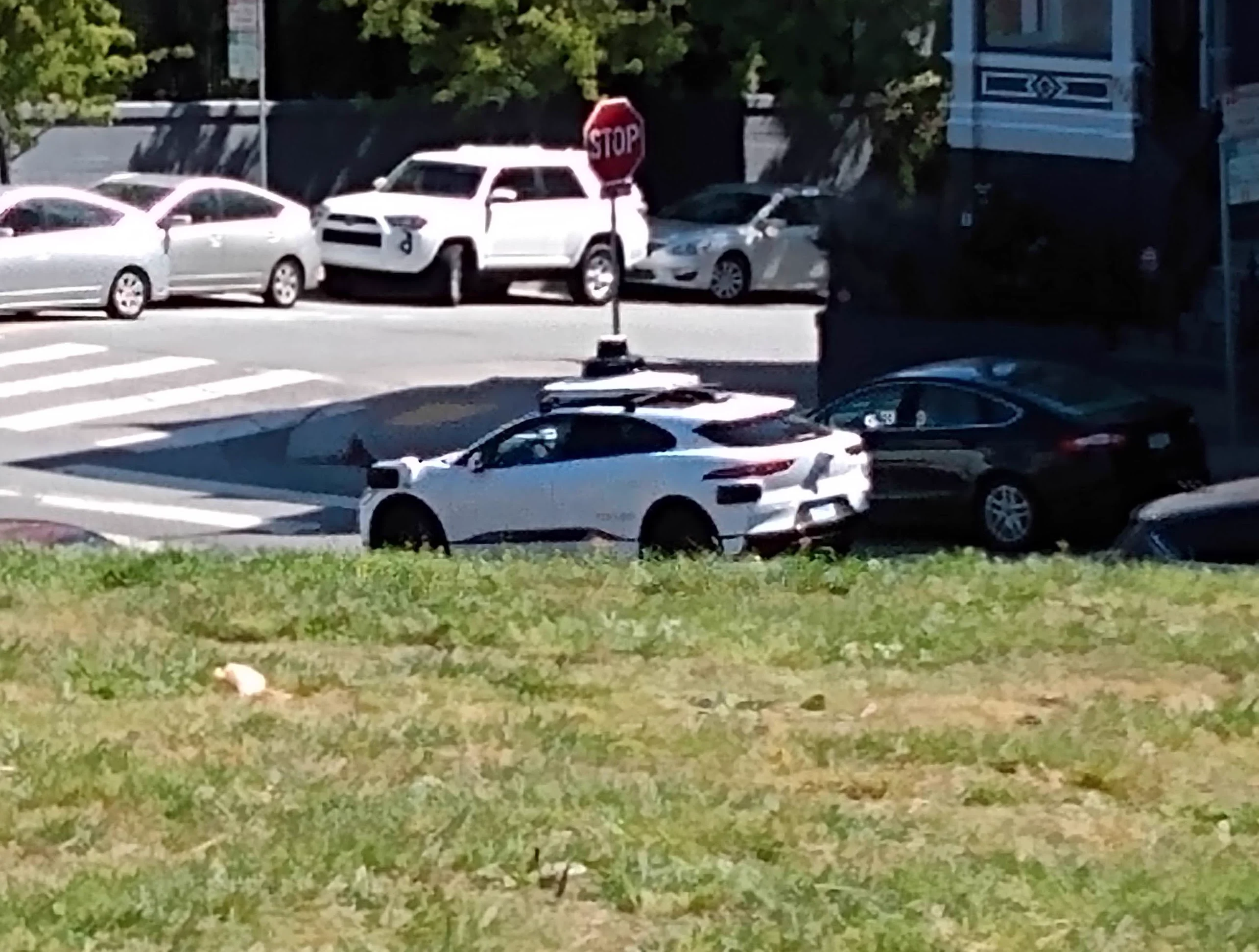
As artificial intelligence technologies rapidly advance and weave deeply into our daily lives and industries, the developer community is increasingly reflecting on the stark double standards and hyper-strict error thresholds applied to machines compared to humans. Software developer and researcher Thariq (@trq212) recently highlighted on social media that artificial intelligence faces an error margin at least 100 times stricter than what is expected of human beings. While human errors and driver mistakes are often met with societal leniency, a single mishap by an autonomous vehicle or an automated agent immediately commands sensational headlines.
Image source: DestinationFearFan 쨌 CC BY-SA 4.0 쨌 https://creativecommons.org/licenses/by-sa/4.0 쨌 https://commons.wikimedia.org/wiki/File:Jaguar_I-Pace_autonomous_vehicle_by_Waymo.jpg

This discussion goes beyond mere technical reliability; it provides a vital window into how society perceives and accommodates technological flaws during the transitional phase into the AI era, shedding light on the evolving dynamics of human-AI interaction. In this article, we examine the roots of these stringent verification expectations and the interactive hurdles encountered in practical workflows, drawing from recent insights shared within the developer ecosystem.
The Harsh Micro-Scrutiny Applied to Autonomous Driving and AI Systems
Societal expectations for artificial intelligence are inherently set far higher than the average performance baseline of humans. Autonomous driving serves as a prime example. On roadways every day, countless traffic accidents and fatalities occur due to human distraction and negligence, yet these incidents are routinely consumed as ordinary parts of daily traffic statistics.
Conversely, when an autonomous system, such as Waymo, experiences even a single isolated collision or erratic driving incident, it instantly dominates major news headlines, sparking intense debates regarding the overall safety of the technology. Artificial intelligence is held to an immaculate moral and technical standard where not a single mistake is forgiven. This phenomenon reflects a public psychological undercurrent demanding flawlessness as a prerequisite for social acceptance, underlying a fundamental distrust of machines.
Decision Fatigue and the Burden of Human Oversight in Coding Agents
Within software development, this structural friction and double standard manifests clearly during daily engineering workflows. Observing how developers interact with modern coding agents—AI tools that autonomously write, modify, and debug code based on user prompts—reveals a fascinating behavioral paradox.
In practice, coding agents frequently pause to loudly ask users for permission or decisions on various implementation details. However, many users tend to repeatedly mash approval buttons or ignore warnings without carefully reviewing the generated code. While the system demands meticulous oversight down to minute details and offloads decisions onto the human, human users themselves rarely possess the time or cognitive bandwidth to thoroughly read and verify every line of code produced. This creates a severe 'decision fatigue' loop, suggesting that as tools become more autonomous, the cognitive monitoring burden and ultimate accountability resting on human shoulders may actually increase.
The Threshold of Intelligence Explosion and Business Outcome Double Standards
These observations extend beyond technical code errors into the realm of real-world business execution and commercial outcomes. For AI agents to achieve a true 'intelligence explosion'—where models recursively self-improve to scale capabilities far beyond human levels—they must demonstrate efficiencies dozens of times greater than the world's most accomplished CEOs and experts.
For instance, if a user tasks an AI with building a billion-dollar SaaS (Software as a Service) business with zero mistakes, and the AI pivots into an unconventional niche like manufacturing toothbrushes for dogs, human society is unlikely to accept the logic easily. While human entrepreneurs are granted the grace of iterative trial and error, artificial intelligence is implicitly required to execute flawless strategic maneuvers from the outset.
Ultimately, for artificial intelligence to secure unreserved societal trust, bridging the gap between acceptable error margins and public expectations remains as crucial as raw computational horsepower. As technology continues to accelerate, society faces a growing imperative to reevaluate how it measures, contextualizes, and accepts machine imperfections.
Sources
- Thariq Official X Post: X (@trq212) Post on November 29, 2026