Dual Prompts for Generating Complete AI Character Reference Sheets from a Single Photo
A practical guide to generating consistent character reference sheets with full-body turnarounds, 10 facial expressions, 6 dynamic poses, and costume details ac
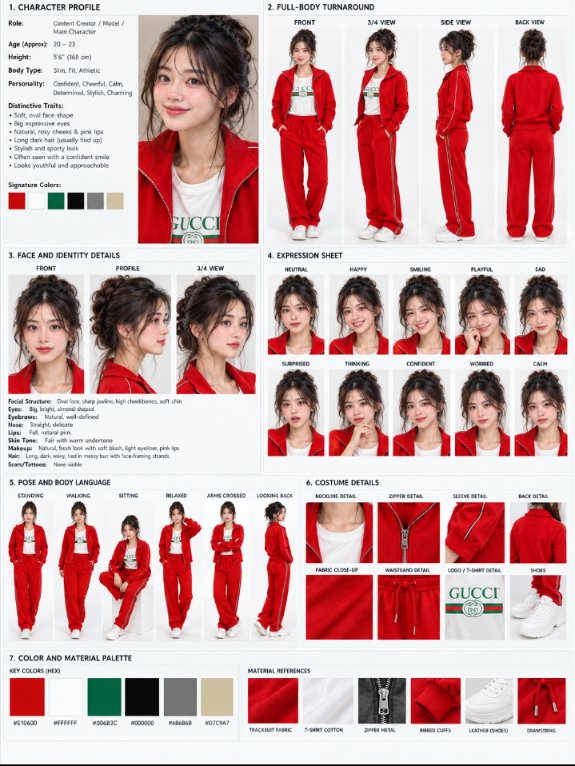
AI creator Adnan (@Adnan_Ai2) has shared two detailed prompts designed to turn a single uploaded portrait into a comprehensive 7-section character reference board using ChatGPT (GPT Image 2), Google Gemini, or xAI Grok.
Image source: X @Adnan_Ai2
Modern multimodal vision generation models have significantly advanced in preserving facial identity, facial proportions, and structural anatomy from an input reference image. These prompts structure the output into an industry-standard pre-production model sheet—covering turnaround angles, expressions, dynamic poses, macro clothing details, and color palettes without drifting from the original face.
Workflow
- Launch Tool: Open ChatGPT (GPT Image 2), Google Gemini, or xAI Grok.
- Upload Reference: Upload a clear single portrait photo of the character.
- Paste Prompt: Choose and paste either of the two structured prompt templates below.
- Generate: Run the generation to produce the high-resolution 7-section design sheet.
Prompt 1 — Exact Character Sheet Style
A standardized character development board layout with seven clean studio panels and light gray division borders.
Use the uploaded male reference image as the primary identity and appearance reference. Create a professional, high-resolution character reference sheet of the SAME male person, arranged exactly like a premium character/model design board. Do not change his facial identity, facial proportions, hairstyle, skin tone, athletic body structure, or overall appearance. The character should remain recognizable throughout every panel.

Create a clean white studio background with thin light-gray dividing lines and a professional editorial layout containing seven clearly separated sections.

1. CHARACTER PROFILE: Include a large realistic close-up portrait of the same male character along with general character information such as role, approximate age, height, athletic body type, confident personality, distinctive facial features, hairstyle, eyebrows, eyes, jawline, nose, lips, skin tone and overall fashion style. Add coordinated color swatches based on the red tracksuit, white shirt, green accent, black/dark details and neutral tones.

2. FULL-BODY TURNAROUND: Show the exact same male character in full body from FRONT, 3/4 VIEW, SIDE VIEW and BACK VIEW. Keep his red tracksuit jacket, red track pants, white T-shirt, white sneakers, hairstyle and body proportions consistent in every view. Neutral standing posture, professional studio lighting, full body visible from head to shoes.

3. FACE AND IDENTITY DETAILS: Show three large realistic facial studies of the same man: FRONT, PROFILE and 3/4 VIEW. Keep his exact recognizable facial structure, strong jawline, defined cheekbones, dark eyebrows, short styled black hair, straight nose and natural masculine appearance. Add small descriptive notes underneath.

4. EXPRESSION SHEET: Create ten separate head-and-shoulder portraits of the same man with different expressions: NEUTRAL, HAPPY, SMILING, PLAYFUL, SAD, SURPRISED, THINKING, CONFIDENT, WORRIED and CALM. The identity must remain exactly consistent.

5. POSE AND BODY LANGUAGE: Show six full-body poses of the same man: STANDING, WALKING, SITTING, RELAXED, ARMS CROSSED and LOOKING BACK. Keep the same red tracksuit outfit and white sneakers in every pose.

6. COSTUME DETAILS: Add close-up panels showing the neckline and white T-shirt, red jacket zipper, sleeve detail, waistband/drawstring, back of jacket, red tracksuit fabric, zipper hardware, T-shirt graphic detail and white sneakers. Make every detail realistic and consistent with the reference outfit.

7. COLOR AND MATERIAL PALETTE: Add clean color swatches with HEX codes for the main red, white, green, black and neutral colors. Beside them show realistic material references for tracksuit fabric, cotton T-shirt, zipper metal, ribbed cuffs, sneaker leather and drawstring material.

Use photorealistic photography, sharp facial details, realistic skin texture, accurate anatomy, professional fashion-catalog lighting, consistent proportions, clean white background, high resolution and extremely consistent character identity. Do not introduce another person. No female character. No unnecessary text or decorative elements. Keep the entire sheet visually similar to a professional character-development/model reference board.
Prompt 2 — More Detailed / Cinematic Version
An enhanced cinematic version with refined skin texture, fabric micro-details, natural lighting, and precise shadow work.
Create a premium photorealistic male character turnaround and identity sheet using the uploaded reference photo as the strict visual reference. The generated character must be the SAME male person shown in the reference, with the same recognizable face, short black hairstyle, facial proportions, skin tone, athletic muscular physique and confident masculine appearance. Preserve his identity consistently across every single image panel.

Design the entire image as a professional character-design presentation board on a clean white and very light-gray studio background. Use a structured 7-section grid with thin borders, small professional labels, balanced spacing and high-end fashion/model portfolio aesthetics.

SECTION 1 — CHARACTER PROFILE:
Place a large close-up portrait of the male character. Beside it include a concise profile describing him as an athletic, fit, confident and stylish male model. Include approximate age range, height, body type, personality, distinctive features, hairstyle, eyebrows, eyes, jawline, nose, lips, skin tone and overall fashion personality. Add six coordinated color swatches taken from his outfit.

SECTION 2 — FULL-BODY TURNAROUND:
Generate four full-body studio views of exactly the same character: front, three-quarter, side and back. The outfit must remain identical: bright red zip-up tracksuit jacket, matching red track pants, white T-shirt underneath with the same green/red accent treatment, and clean white sneakers. Maintain identical body proportions, hairstyle and facial identity in every view. Use neutral professional poses and soft studio lighting.

SECTION 3 — FACE AND IDENTITY:
Create detailed close-up portraits from front, side profile and three-quarter angle. His face must remain highly consistent. Preserve his strong masculine jawline, defined cheekbones, thick dark eyebrows, dark expressive eyes, straight nose, natural lips, short black hair and clean natural skin. Add small professional facial-description notes underneath.

SECTION 4 — EXPRESSION SHEET:
Create a 2-row grid of ten expressions using the exact same male identity: neutral, happy, smiling, playful, sad, surprised, thinking, confident, worried and calm. Expressions should change naturally while the face, hairstyle and facial proportions remain consistent. Use head-and-shoulder framing.

SECTION 5 — POSE AND BODY LANGUAGE:
Create six full-body photographs of the same male character wearing the same red tracksuit: standing confidently, walking naturally, sitting casually, relaxed pose, arms crossed confidently, and looking back over his shoulder. Maintain realistic anatomy and consistent clothing.

SECTION 6 — COSTUME DETAILS:
Create detailed macro close-ups of the outfit: white T-shirt neckline, red jacket collar, metallic zipper, sleeve and seam details, elastic waistband and drawstring, back jacket detail, red fabric texture, zipper hardware, T-shirt graphic area and white sneaker details. All costume details must match the original reference.

SECTION 7 — COLOR AND MATERIAL PALETTE:
At the bottom create a professional palette containing red, white, green, black and neutral gray/beige HEX color blocks. Beside the colors place realistic texture samples for red tracksuit fabric, white cotton T-shirt, zipper metal, ribbed cuffs, sneaker material and drawstring.

The final result must look like a high-end professional character/model reference sheet rather than a random collage. Use photorealistic rendering, realistic skin pores, accurate clothing folds, natural shadows, studio-quality lighting, sharp focus, clean typography, consistent scale and precise alignment. The same male character must appear in every panel. Do not change his identity, do not add a woman, do not alter the outfit design unnecessarily, and do not add any unrelated characters or objects.
7-Section Architecture Breakdown
- 1. Character Profile: Hero close-up portrait accompanied by structured character parameters (age, height, physique, temperament) and primary color swatches.
- 2. Full-Body Turnaround: 4 orthogonal full-body studio angles (Front, 3/4 View, Side, Back) maintaining uniform proportions and costume elements.
- 3. Face & Identity: 3 multi-angle facial studies (Front, Profile, 3/4) focused on bone structure, jawline, and natural facial features.
- 4. Expression Sheet: 10 distinct emotional states (neutral, happy, smiling, playful, sad, surprised, thinking, confident, worried, calm).
- 5. Pose & Body Language: 6 functional full-body postures (standing, walking, sitting, relaxed, arms crossed, looking back).
- 6. Costume Details: Macro close-ups for stitching, zippers, waistbands, fabric weave, and footwear.
- 7. Color & Material Palette: Verified HEX swatch blocks alongside textural swatches for cotton, track knit, hardware metals, and leather.
Original source
- Adnan (@Adnan_Ai2): X Post (2108146578989174847)