18 Essential Architecture Patterns for Production AI Agents: Engineering Checklist
18 essential engineering patterns for production AI agents, covering Temporal state machines, context budgeting, System-One routing, 3-tier memory, and cost kil
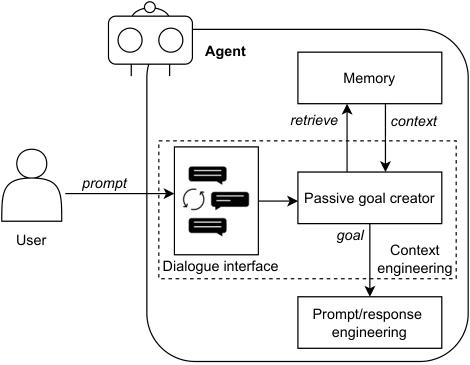
Image source: https://arxiv.org/html/2405.10467v4
AI systems engineer Suraj Sharma (@suraj_sharma14) shared an actionable checklist of 18 essential architectural patterns required to take AI agents from fragile chat-loop prototypes to robust, production-grade systems.
Naively chained prompts and in-memory chat loops break quickly under real-world conditions like network drops, context overflow, and unpredictable tool failures. Below is the structured breakdown of the 18 patterns across state management, cost and latency optimization, security, and continuous evaluation.
1. Workflow Resilience and State Management
- Temporal State Machines: Replace fragile in-memory chat loops with Temporal-backed state machines to build crash-resilient workflows that seamlessly resume execution from the exact point of interruption.
- Dynamic Context Assembler: Implement a dynamic assembler that strictly calculates and enforces token budgets across memory, tool schemas, and reference documents on a per-request basis to prevent context overflow.
- 3-Tier Memory Engine: Construct a memory hierarchy dividing storage into Working memory (immediate conversation scratchpad), Episodic memory (historical interactions), and Semantic memory (long-term domain knowledge), backed by automated eviction and summarization compression policies.
- Checkpointed Human-in-the-Loop (HITL) Gates: Wire approval gates directly into Slack for high-stakes actions (such as database deletions or financial transactions), snapshotting state checkpoints before executing sensitive operations.
2. Routing, Cost Controls, and Latency Optimization
- System-One Micro-Router: Deploy a lightweight classifier to handle 95% of routine triage in milliseconds, escalating only ambiguous or complex edge cases to heavy reasoning models.
- Per-Query Cost Kill-Switch: Implement an automated circuit breaker that instantly halts any agent execution loop if projected token spend exceeds $0.50 per query, preventing runaway loops from burning cloud credits.
- Proxy-Layer KV-Cache Prefix Sharing: Share KV-cache prefixes across identical system prompts at the proxy layer to slash Time-To-First-Token (TTFT) by up to 80%.
- Speculative Decoding Pipeline: Set up a local 2B draft model to generate token candidates alongside a cloud 70B verifier model, cutting end-to-end latency by 60%.
- 4-Tier Graceful Degradation Chain: Build a tiered fallback chain running from Frontier API → Mid-tier LLM → Local Quantized Model → Semantic Cache to guarantee uninterrupted service availability during upstream API outages.
3. Security, Protocols, and Tool Interoperability
- Raw Model Context Protocol (MCP) Server: Build a native MCP server from scratch to expose database resources directly and securely to external agents with fine-grained permission boundaries.
- Inter-Agent Sanitization Proxy: Insert a filtering proxy between collaborating agents to guarantee that unvalidated output from Agent A cannot trigger indirect prompt injection against Agent B.
- PII Masking and Unmasking Proxy: Replace sensitive personal identifiable information (PII) with synthetic UUIDs before payloads reach the LLM, securely unmasking and restoring original values post-generation.
- API-to-Browser Fallback: Automatically launch a headless browser to extract information or execute actions directly from rendered web interfaces whenever a target REST API returns 404 or structural errors.
4. Evaluation, CI/CD, and Observability
- CI Trajectory Grading: Build automated grading pipelines in continuous integration that validate an agent's tool-call sequence against established golden paths, blocking PR merges upon unexpected deviation.
- 5% Shadow Traffic Routing: Silently route 5% of live production traffic to candidate models, comparing trajectory execution paths to automatically generate comprehensive diff reports.
- Automated DPO Pipeline: Channel user thumbs-down signals into structured preference pairs to automatically populate nightly LoRA fine-tuning queues.
- OpenTelemetry LLM Hop Tracing: Capture exact token metrics, hop latencies, and tool call arguments across every single model invocation using OpenTelemetry-standard distributed spans.
- Multi-Agent Swarm Fuzzing: Stress-test agent recovery routines by deliberately injecting malformed tool responses and synthetic context overflow errors into multi-agent swarms.
Original source
- Suraj Sharma (@suraj_sharma14) on X: https://x.com/suraj_sharma14/status/2105991192349679919